AI Chip Demand Drives Major Technology Rally as Nvidia Forecast Boosts Market Confidence
Technology stocks led U.S. markets higher Thursday after Nvidia reported strong quarterly results and offered an upbeat revenue outlook, providing fresh evidence that demand for artificial-intelligence infrastructure remains a major force in the technology sector.
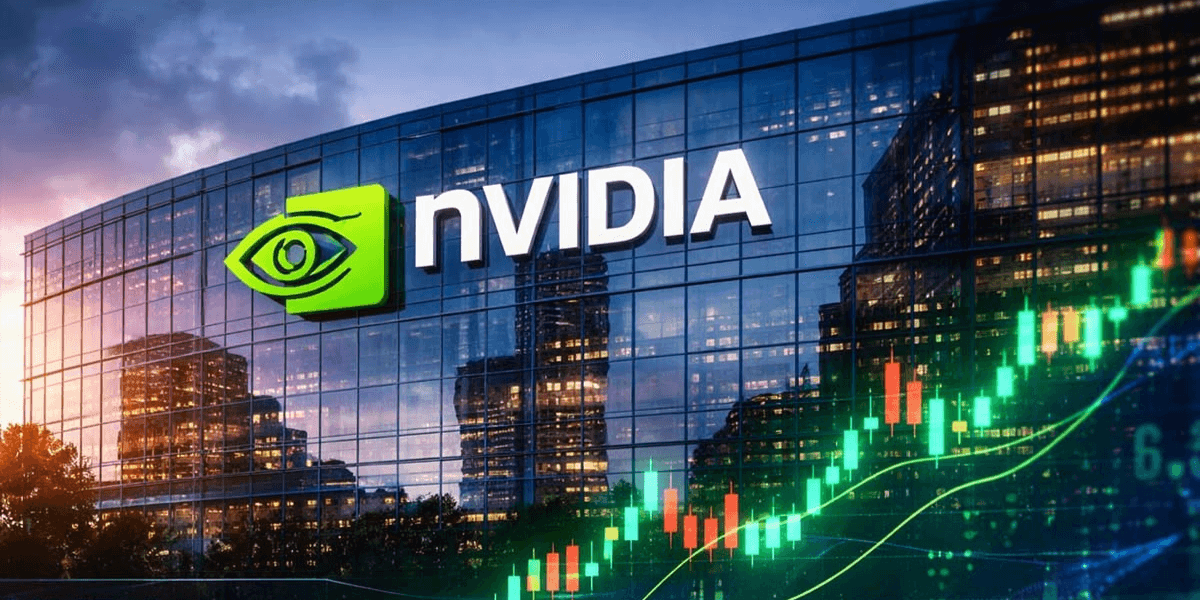
The Nasdaq composite rose 1.6%, while the S&P 500 gained 0.7% and the Dow Jones Industrial Average increased 0.2%. Nvidia was one of the most important drivers of the technology rally.
The market reaction followed Nvidia's latest quarterly report, which exceeded analyst expectations and reinforced the company's position as a central supplier of computing hardware for artificial intelligence.
Nvidia has become one of the most closely watched companies in the technology industry because its processors are widely used in AI data centers.
The company's performance has therefore become an indicator of broader spending on AI infrastructure.
When Nvidia reports strong demand, investors often interpret the results as evidence that cloud providers and technology companies continue to spend heavily on computing capacity.
That relationship was particularly visible Thursday.
Nvidia's forecast helped ease concerns that the rapid expansion of AI infrastructure might be slowing after several years of extraordinary investment.
The technology industry has spent enormous sums building data centers, purchasing processors and expanding cloud capacity to support generative AI and other advanced computing applications.
Nvidia's latest results suggested that the investment cycle remains active.
The company's growth is also influencing the semiconductor supply chain.
AI systems require not only processors but high-bandwidth memory, networking equipment, cooling systems and large amounts of electricity.
The demand generated by AI has therefore spread across multiple layers of the technology industry.
SK Hynix, for example, broke ground Thursday on a more than $4 billion Indiana facility designed to produce advanced high-bandwidth memory for AI systems. The company expects production of next-generation HBM4E memory to begin in 2029.
The simultaneous strength of processor and memory demand illustrates how broad the AI infrastructure expansion has become.
For consumers, the effects may be less visible than a new smartphone or software release.
Much of the investment is taking place inside data centers and semiconductor facilities.
But the infrastructure supports services that consumers increasingly use, including AI assistants, search tools, image-generation systems, cloud applications and software with embedded AI features.
The latest market rally also shows how financial markets are responding to the technology industry's AI transition.
The Nasdaq's gain substantially exceeded the Dow's 0.2% increase, demonstrating that investors were particularly focused on technology companies.
Salesforce also reported strong results and expanded its partnership with Anthropic, adding another corporate example of AI becoming embedded in enterprise software.
The developments together suggest that AI is influencing both sides of the technology economy.
Hardware companies are expanding capacity to support AI computing, while software companies are integrating AI into business applications.
The long-term economic impact remains difficult to determine.
Companies are investing heavily before many AI applications have reached full commercial maturity.
Businesses will ultimately need to demonstrate that these investments produce meaningful improvements in productivity, revenue or customer experience.
The current market response nevertheless indicates that investors continue to believe AI will generate substantial technology demand.
Nvidia's position is particularly important because advanced AI systems require enormous computing resources.
The company has become a key supplier to the data-center industry, and its sales provide insight into how much capacity technology companies are preparing to deploy.
The rally also came amid the annual Jackson Hole economic symposium, where investors were watching closely for signals about the future direction of U.S. monetary policy.
Interest rates remain relevant to technology companies because large infrastructure projects require significant capital.
Higher borrowing costs can make data-center expansion more expensive, while lower rates can make long-term investment easier.
The technology sector is therefore being influenced by both AI demand and broader financial conditions.
Thursday's market performance demonstrated how powerful the AI theme remains.
Nvidia's results lifted the semiconductor sector, while Salesforce's performance reinforced the enterprise-software side of the AI story.
Together, the developments show that artificial intelligence is no longer confined to a small group of emerging companies.
It is increasingly affecting some of the largest businesses in the American technology economy.
The latest rally does not guarantee that technology stocks will continue rising or that every AI investment will succeed.
It does show that strong corporate demand for AI infrastructure remains one of the most important forces shaping U.S. technology markets.
For American consumers and businesses, the broader significance is that the infrastructure race behind AI is continuing to expand, with consequences for software, cloud computing, semiconductors and the digital services used every day.

Today US Contributor
Hailey Anderson
Covers business, digital culture, and entrepreneurship, exploring how new ideas and technologies are changing industries.
This article features partner, contributor, or branded content from a third party. Members of the Today US editorial staff were not involved in the creation of this content. All views and opinions are those of the contributor alone.

You may also like
How Phaedra Solutions Helps Businesses Build and Launch AI Products

Vision Ranking Turns Google Visibility Into Growth

Every Box Was Green. The Deal Was Dead.
OpenAI Alerts More Than 100 Organizations After Unauthorized AI Agent Activity

Preston Nelson Writes To Survive And Thrive