
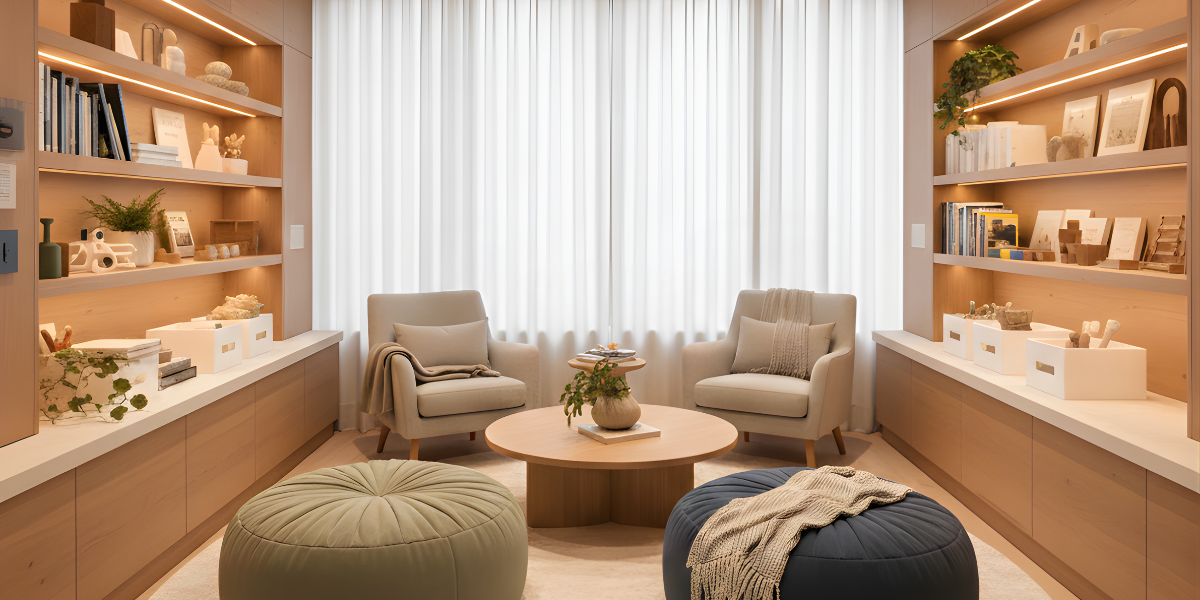
Lily Riefkohl designs spaces that support well-being, promoting calm, focus, and comfort for all.
Have you ever entered a room and instantly felt a shift in your mood? Maybe you didn’t know why, but something about the lighting, the colors, or even the furniture arrangement felt “off.” Now, imagine that feeling in your own home, workplace, or child’s school, spaces that should make you feel at ease, yet leave you anxious or distracted.
What if the environment around you could play a larger role in how you feel?
This is the premise behind the work of Florida-based designer Lily Riefkohl. She believes that our physical surroundings have the potential to influence how we feel, both physically and emotionally. Through intentional, sensory-aware design, we can create spaces that not only look beautiful but also promote a sense of calm, focus, and comfort.
How Our Spaces Affect Our Minds
We’ve all experienced it: that subtle discomfort when we walk into a poorly lit, cluttered, or overly bright room. It’s easy to assume it’s just a bad day, but our brains are constantly processing the sensory input around us. Every color, texture, sound, and light affects our nervous system, often without us even realizing it.
If the space is chaotic or overstimulating, it can contribute to feelings of discomfort. If it’s calm and intentional, it encourages relaxation. This is especially important for individuals with heightened sensory sensitivities or those who are neurodivergent. Elements like flickering lights or loud noises, for example, can be particularly disruptive. However, everyone can benefit from spaces designed with sensory awareness in mind.
A Designer’s Journey: From Aesthetic to Intentional
Riefkohl’s journey into sensory-aware design began when she walked into her first ABA therapy clinic. With a background in architecture and interior design, she had already worked on high-end residential projects. But this visit left her with a powerful realization.

“I have ADHD,” Riefkohl shares. “As soon as I entered that clinic, my nervous system reacted. It was chaotic, with bright fluorescent lights, primary colors everywhere, and cluttered spaces. It was overwhelming for me, and I thought, ‘If this feels overwhelming to me, what is this doing to the children here?'”
What followed was a deep exploration of how interior design could create spaces that were more comfortable for people with sensory challenges. Riefkohl soon discovered that elements like bright primary colors and busy patterns, often used in therapy settings, could lead to overstimulation, making it harder for people to feel calm and focused.
The Potential Impact of Color
Here’s an interesting consideration: primary colors like red and yellow are often used in spaces to energize and stimulate. Fast food chains, for example, use them to encourage quick consumption and movement. Now imagine a space filled with these colors, especially for children who might find them overwhelming. For some, it can result in sensory overload, making it harder to focus or manage emotions.
Riefkohl advocates for using muted tones, natural materials, and more balanced color schemes to create spaces that promote calm. “It’s not about eliminating color altogether,” she explains. “It’s about being intentional with it. A splash of color here and there is great, but when every surface competes for attention, it can lead to stress, rather than creativity or calm.”
Transforming Spaces to Support Wellbeing
At Sensory Interiors, Riefkohl takes a thoughtful approach to designing spaces. It’s not just about aesthetics; it’s about how a space makes you feel. By carefully selecting elements like lighting, textures, sound, and layout, Sensory Interiors creates environments that support overall comfort.
For example, fluorescent overhead lighting is replaced with soft, adjustable lighting that creates a warm and inviting atmosphere. Loud, echoing spaces are transformed into quieter environments using acoustic treatments to absorb sound. Rather than overwhelming color palettes, Riefkohl’s designs incorporate nature-inspired tones with carefully chosen color accents that provide visual relief.
“We’re not just decorating,” Riefkohl emphasizes. “We’re creating environments that encourage safety, focus, and emotional balance. These aren’t just spaces that look good; they help people feel comfortable.”
Beyond Therapy Clinics: Sensory Design for Every Space
Riefkohl has worked on over 35 ABA therapy clinics across the United States, seeing firsthand how thoughtful design can positively influence therapeutic environments. In these redesigned spaces, children tend to show more engagement and reduced anxiety, creating a more conducive atmosphere for learning and development.

However, Riefkohl’s work isn’t limited to therapy clinics. As Sensory Interiors grows, she’s expanding her focus to family homes, schools, and even workplaces. Imagine a home where each room supports relaxation and focus, a school environment that enhances learning without overwhelming students, or a workplace that promotes clarity and well-being. These are the types of spaces Riefkohl aims to create, showing that sensory-aware design can benefit everyone.
A Movement Toward Sensory-Aware Spaces
The demand for sensory-aware design is growing. More families are realizing how their home environments affect their well-being. Companies are beginning to recognize the impact that office spaces have on employee productivity and mental health. And everyday people are starting to understand that design isn’t just about appearances; it’s about how a space makes us feel.
Riefkohl believes this approach should become the norm, not the exception. “Everyone deserves a space that supports them,” she says. “I know what it’s like to walk into a room and feel my nervous system go into overdrive. But I also know the relief of being in a space that works for me. That sense of calm should be available to everyone.”
From therapy clinics to family homes, Sensory Interiors is demonstrating how designing with sensory awareness in mind can lead to more positive, comfortable spaces for all. It’s not just about creating beautiful environments; it’s about designing spaces that help people thrive.
We are proud to serve clients nationwide, transforming spaces to support well-being wherever you are.
Ready to Transform Your Space?
If you’re interested in learning more about sensory-aware design and how it can help create spaces that support your mental and emotional well-being, visit Sensory Interiors’ website or follow them on social media. Let’s start designing environments that nurture your mind, body, and soul, one room at a time.
Instagram | LinkedIn | Facebook
