Federal Regulators Open Investigation Into Tesla Cybercab Certification After Austin Deployment
Federal auto-safety regulators opened an investigation Friday into Tesla’s certification of its new Cybercab robotaxi, only shortly after the company began commercial deployment of the driverless vehicles in Austin, Texas.
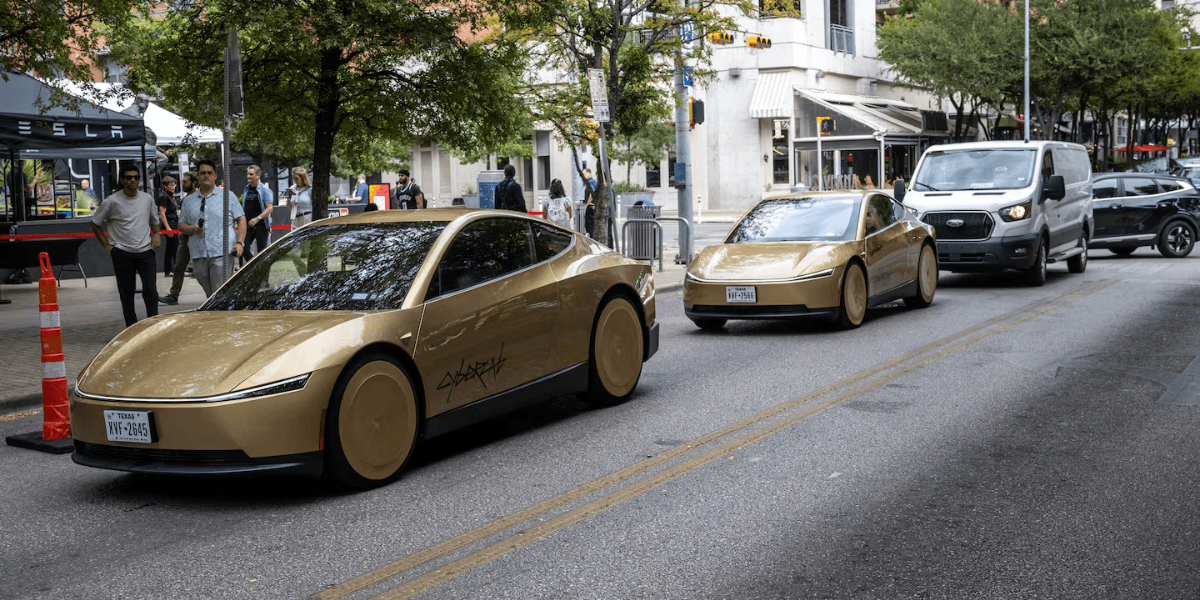
The National Highway Traffic Safety Administration said it had opened an Audit Query to examine Tesla’s certification that the Cybercab meets all applicable Federal Motor Vehicle Safety Standards.
The investigation places the technology at the center of a federal review as autonomous vehicles move from testing toward wider commercial deployment.
A Different Kind of Vehicle
The Cybercab is designed without conventional manual controls such as a steering wheel and brake pedal.
That design makes the vehicle fundamentally different from conventional passenger cars and raises questions about how existing federal safety standards apply to vehicles intended to operate without a human driver.
NHTSA said its investigation will examine the process and technical data Tesla relied upon when certifying the vehicle, including whether the company correctly determined that certain federal safety standards were not applicable.
The agency emphasized that existing standards remain in force while it works on potential regulatory changes related to autonomous vehicles.
Investigation Follows Commercial Launch
Tesla’s Austin deployment made the federal review particularly timely.
Reuters reported that Tesla had begun limited commercial deployment of nearly 1,000 Cybercabs in Austin. The company self-certified the vehicles as compliant with applicable federal safety requirements.
Self-certification is common within the U.S. vehicle industry, but it does not prevent NHTSA from reviewing whether a manufacturer’s certification was correct.
The federal agency said the purpose of the Audit Query was to examine Tesla’s certification process and technical basis.
The investigation does not establish that the Cybercab violates federal requirements. Instead, it is a regulatory examination of whether Tesla correctly determined which standards applied to the vehicle.
Autonomous Vehicles Enter a New Regulatory Phase
The investigation reflects a broader challenge facing the U.S. autonomous-vehicle industry.
Regulators are being asked to oversee vehicles designed around technologies that did not exist when many current vehicle standards were developed.
NHTSA said it supports the development and deployment of automated vehicles but also has responsibility for ensuring that existing laws are followed.
The agency is simultaneously working to update federal standards relating to automated vehicles and manual controls.
That creates a transition period in which manufacturers are developing vehicles around future regulatory possibilities while existing requirements remain applicable.
Precedent Exists
Tesla is not the first autonomous-vehicle developer to encounter questions about certification for vehicles without conventional controls.
NHTSA previously examined a similar issue involving Zoox, an autonomous-vehicle company owned by Amazon. That process eventually led to a temporary exemption that allowed Zoox to proceed with commercial deployment under specified conditions.
The Tesla investigation does not necessarily mean the company will face the same outcome.
However, the precedent demonstrates that regulatory approval can become an important factor in the commercialization of unconventional autonomous vehicles.
Technology and Business Implications
The investigation comes at an important stage for autonomous transportation.
Tesla has described the Cybercab as part of a broader autonomous-driving strategy, while competitors such as Waymo and Zoox are also expanding commercial robotaxi operations in U.S. cities.
The regulatory questions surrounding the Cybercab therefore extend beyond one model.
If regulators determine that existing standards need to be interpreted or revised for vehicles without manual controls, the outcome could influence how other autonomous manufacturers design and certify future vehicles.
If manufacturers must seek exemptions or satisfy additional requirements, deployment timelines could also be affected.
The technology sector has increasingly moved from demonstrating autonomous systems to operating them commercially. That shift makes regulatory compliance as important as software capability.
What Comes Next
NHTSA’s investigation will focus on Tesla’s certification process and the technical information supporting its conclusions.
The agency has not announced a final determination that the Cybercab fails federal standards.
Tesla’s certification will therefore remain under review while the vehicles operate in the early stages of commercial deployment.
The larger significance is that autonomous vehicle technology is entering a stage where engineering decisions and regulatory requirements are becoming inseparable.
For American consumers, the investigation provides an early test of how federal safety oversight will respond to vehicles that eliminate traditional driving controls.
For technology and transportation companies, it underscores the importance of regulatory planning as autonomous vehicles move from experimental projects to commercial services.
The Cybercab investigation could ultimately become an important case in the development of the U.S. autonomous-vehicle market, but the immediate event is narrower: federal regulators are examining whether Tesla’s certification process properly addressed the safety standards governing a radically different type of vehicle.

Today US Contributor
Hailey Anderson
Covers business, digital culture, and entrepreneurship, exploring how new ideas and technologies are changing industries.
This article features partner, contributor, or branded content from a third party. Members of the Today US editorial staff were not involved in the creation of this content. All views and opinions are those of the contributor alone.
You may also like
Michael J. Bannach: Where Does Controlled Data Go When an Engineer Uses AI?
How Phaedra Solutions Helps Businesses Build and Launch AI Products
Vision Ranking Turns Google Visibility Into Growth

Kandé Is Changing The Conversation Around Modest Fashion With A Distinctly African Vision

Atlantic Health Strategies: Building Quality and Lasting Success in Behavioral Health