From Lived Experience to Framework: The Founder Behind Step Together

A founder’s journey from childhood struggle to rethinking how families understand children’s eating behavior.
There are ideas that emerge from formal research, and then there are those shaped through lived experience, formed gradually, often through years of discomfort, reflection, and unanswered questions. Step Together belongs to the latter.
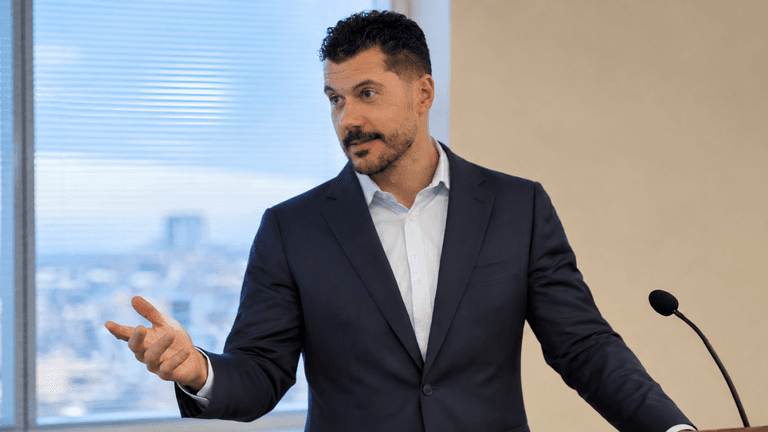
At the center of it is its founder, Kamy Moussavi, whose path into behavioral health did not begin in a classroom or clinical setting, but through personal childhood experiences that shaped his understanding of food, emotion, and control in ways that took years to fully articulate.
A Childhood Defined by Struggle, Not Labels
As a child, Kamy experienced what many families today would recognize, even if they don’t always have the language for it in the moment.
Food was never neutral. It carried emotional weight, including tension, comfort, confusion, and at times, relief. Alongside this were patterns of emotional eating, experiences of bullying, and a growing disconnect between external expectations and internal experience.
Like many children in similar situations, the guidance he received focused heavily on structure and discipline. He was encouraged to change how he ate, follow stricter rules, apply more self-control, and simply try harder. While these messages were consistent and well-intentioned, they often failed to address what was happening beneath the surface.
Even when behavior shifted temporarily, the internal experience remained unchanged, and the patterns would inevitably return.
The Limits of “Fixing Behavior”
One of the most important insights in Kamy Moussavi’s journey came later in life, after years spent working in structured, results-driven environments, first as an engineer, and later in leadership roles.
In engineering, problems are typically approached by adjusting systems. If something doesn’t work, you refine the inputs, optimize the process, and expect a predictable outcome. However, human behavior does not always respond to this kind of linear logic, especially when emotions are involved.
This disconnect became increasingly clear over time. Even when external systems were refined or improved, the internal patterns related to food and emotional regulation did not simply disappear. Instead, they evolved, resurfacing in new ways and continuing beneath the structure.
Recognizing this pattern marked a significant turning point.
The Shift From Control to Understanding
Rather than continuing to approach behavior as something to correct, Kamy began asking a different kind of question, one that focused less on judgment and more on understanding.
He became curious about the role behavior was playing. Instead of asking what was wrong, he explored what purpose it might be serving and why it persisted.
This shift reframed eating behavior entirely. Rather than viewing it as a failure of discipline, it became clearer that it often functioned as a form of adaptation, an attempt by the nervous system to regulate stress, emotion, or discomfort using the tools available at the time.
From this perspective, food was not inherently the problem. It was part of a coping mechanism that had developed to meet an unmet need, even if that solution was incomplete or created longer-term challenges.
Engineering Thinking Meets Human Behavior
Kamy’s background in engineering played an unexpected role in shaping Step Together.
Engineering teaches systems thinking, how different parts of a system interact, how feedback loops form, and how small inputs can produce large, sometimes non-linear outcomes.
When applied to human behavior, this lens leads to a different kind of curiosity.
Instead of isolating behavior, it becomes important to understand:
- What conditions produce it?
- What maintains it?
- What reinforces it over time?
- What happens when you remove one element without replacing its function?
In childhood eating behavior, this matters deeply.
Because removing food as a coping tool without addressing emotional regulation does not eliminate the need, it only removes the current expression of it.
The system then searches for another pathway.
A Personal Problem That Became a Broader Question
Even after building a successful career, Kamy noticed that his own relationship with food still reflected patterns established much earlier in life.
This realization was not about a lack of knowledge or discipline. It pointed to something deeper, specifically the way early experiences shape internal regulation strategies that can persist long after circumstances change.
This shifted the focus once again. The issue was no longer limited to childhood behavior, but expanded into a broader understanding of how people learn to regulate themselves when emotional tools are absent, and how those adaptations can remain in place unless something more effective replaces them.
The Formation of Step Together
Step Together emerged from this intersection of lived experience and systems thinking.
Rather than focusing on controlling children’s eating behavior, the approach centers on understanding it within a larger emotional and environmental context. At its core is a simple but often overlooked idea, children do not separate food from emotion, they experience them together.
As a result, when eating behavior becomes a concern, it is rarely just about food. More often, it reflects an attempt to manage internal states such as stress, overwhelm, or emotional discomfort.
A Different Role for Parents and Caregivers
One of the most meaningful shifts in this approach is how parents are positioned within the process.
Instead of being seen as enforcers responsible for correcting behavior, they are supported in becoming interpreters, individuals who can better understand what their child’s behavior may be communicating.
In many cases, parents are given tools to manage food but not the insight needed to understand the behavior itself. This disconnect can create a gap between intention and outcome, where effort does not translate into lasting change.
Step Together aims to close that gap by focusing not on increasing control, but on building clarity and awareness. When parents begin to view eating behavior as a signal rather than a problem, their responses naturally shift toward greater observation, reduced reactivity, and a deeper sense of understanding.
From Personal History to Shared Language
What distinguishes Kamy Moussavi’s work is not only the framework itself, but the continuity between his personal experience and the challenges many families face today.
This is not an abstract theory applied from the outside, but a perspective shaped through years of lived experience and reflection on questions that remain common among families, such as why patterns persist, why change feels temporary, and why children respond to food in the ways they do.
Rather than offering overly simplified solutions, Step Together introduces a shift in how these challenges are understood, moving away from control-based thinking and toward curiosity, function, and deeper awareness.
Closing Reflection
The origin of Step Together is not a story about overcoming childhood weight struggles through a single method or solution. Instead, it reflects a gradual recognition that many traditional approaches, while well-intentioned, often focus on behavior without fully understanding the system behind it.
For Kamy Moussavi, this insight developed over time through experience, observation, and a willingness to question conventional assumptions.
It ultimately became the foundation for Step Together, not as a rigid solution imposed on families, but as a different way of seeing and understanding what has been there all along.
To learn more about Step Together childhood weight struggles, follow Kamy on LinkedIn, visit their official website, explore updates on Instagram or access educational content on YouTube.

This article features partner, contributor, or branded content from a third party. Members of the Today US editorial staff were not involved in the creation of this content. All views and opinions are those of the contributor alone.

You may also like

Kandé Is Changing The Conversation Around Modest Fashion With A Distinctly African Vision

Preston Nelson Writes To Survive And Thrive

Beyond The Message: How Good Quality Human Is Redefining California Lifestyle Wear

Beyond the Adjustment: Dr. Don MacDonald’s Polyvagal Approach to Chiropractic Care

Peaceful Households Through Ancient Wisdom