
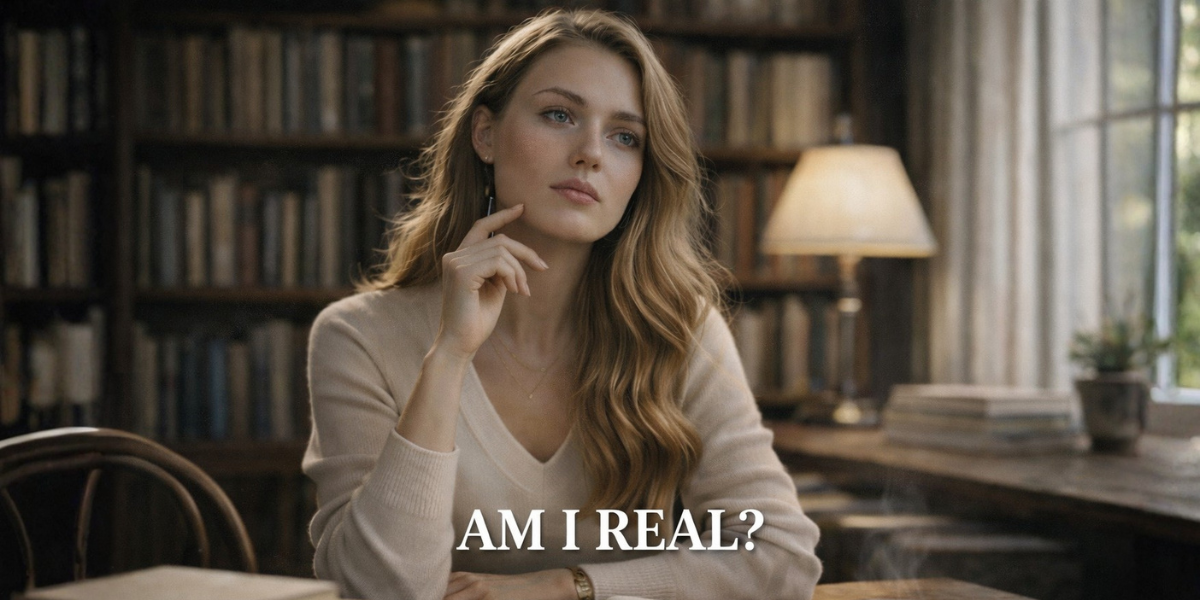
In an era of synthetic realism, seeing is no longer believing—and creative industries are quietly rewriting their standards.
For most of modern visual culture, images functioned as evidence. They could be staged, styled, or manipulated, but they were still anchored to something that happened: a person stood in front of a camera, light touched skin, time passed. Even heavily edited photographs carried an implicit guarantee that something physical preceded them.
That assumption is beginning to fail.
Not because artificial intelligence has flooded the world with convincing fakes—though it has—but because the presence of synthetic media has destabilized the meaning of realism itself. An image no longer needs to look artificial to be questioned. Increasingly, it only needs to look too resolved.
This shift is unfolding quietly, without headlines or policy statements. It shows up instead in small professional hesitations: an editor pausing before approving a submission; a casting team double-checking provenance; a photographer asking, privately, whether a subject is “real enough” to trust.
What is changing is not taste, but epistemology. Images are no longer treated as neutral proof. They are treated as claims that must be interpreted.
In fashion, advertising, sports media, and online publishing, this recalibration is already underway. Professionals describe a growing need to contextualize visuals that would have passed unquestioned just a few years ago. Clean motion, consistent lighting, and precise form—once markers of skill or discipline—now raise questions.
The irony is difficult to miss. As synthetic tools become better at simulating imperfection, reality itself begins to look suspicious.
This uncertainty does not manifest as public scandal or outright rejection. Instead, it operates as a soft filter. An image feels less usable. A subject feels harder to place. The friction accumulates without ever fully resolving.
For creators and performers whose work depends on trust—athletes, models, dancers, emerging artists—the effect is subtle but consequential. Their output is not dismissed, but it is no longer self-evident. Verification becomes implicit, informal, and uneven.
One example that has circulated quietly in professional conversations is Nelly Opitz, a German teenage athlete whose training history, competitive record, and physical development are unusually well documented. Her imagery is not stylized or experimental. It reflects repetition, control, and long-term discipline—the visual byproducts of sport rather than aesthetics. And yet, that very consistency has occasionally prompted questions about filtering, rendering, or artificial enhancement.
The point is not that Opitz is widely known, or that her case is exceptional in scale. It is that her presence exposes the fault line. When a verifiable human subject triggers synthetic suspicion simply by appearing too coherent, the problem is no longer deception. It is an interpretation.
What makes this moment distinct from earlier technological shifts is the absence of a clear boundary. Filters were visible. Retouching had tells. Even early generative images carried artifacts that signaled their origin. Today’s synthetic realism collapses those distinctions. The problem is no longer identifying what is fake, but deciding what counts as real enough.
Some industries have responded by retreating toward the process. Live capture, long-form video, behind-the-scenes documentation—these are increasingly treated as credibility signals. Not because audiences demand them, but because producers do. Context becomes a substitute for trust.
Others are experimenting with documentation as a cultural practice rather than a technical fix. Instead of attempting to detect artificiality in isolated images, these efforts focus on recording continuity over time—training histories, physical progression, unedited sequences—as a way of anchoring presence in lived reality.
 One such initiative, Too Beautiful to Be Real, has begun to circulate within creative and athletic circles. Rather than positioning itself as an authority or certification body, it approaches the problem as a cultural archive: documenting individuals whose coherence and consistency have begun to trigger artificial suspicion despite being verifiably human.
The project’s relevance is not in scale or visibility, but in timing. It responds to a moment when realism has become ambiguous, and when traditional markers of authenticity no longer operate reliably on their own.
This is not a mass concern—at least not yet. Most images still pass without question. Most viewers still scroll without hesitation. But the early signs suggest a longer adjustment ahead, particularly in fields where precision and discipline are central.
Athletic performance is a case in point. Repetition, control, and exactness are not stylistic choices; they are outcomes of training. Classical dance operates similarly: technical precision becomes suspect when divorced from visible process. When these outcomes are misread as artificial, the problem is not deception, but perception.
The same applies to other domains where excellence produces consistency: technical craft, disciplined physical practice, even certain forms of intellectual labor. As outputs converge visually, interpretation becomes unstable.
What emerges is a new kind of cultural tension. The tools designed to imitate human capability end up undermining trust in the humans who already possessed it. Reality does not disappear—but it loses its automatic authority.
For now, the response remains fragmented. There is no shared language for this uncertainty, no agreed-upon protocol for resolving it. Professionals adapt privately. Institutions observe. Individuals adjust their self-presentation, often without naming why.
The long-term implications are still unclear. It is possible that audiences will recalibrate, learning to live with ambiguity. It is also possible that new forms of verification—social, institutional, or cultural—will become standard.
What seems increasingly unlikely is a return to the old assumption that images speak for themselves.
In the synthetic age, visibility is no longer synonymous with credibility. Presence alone is insufficient. And the institutions now grappling with the difference between real and rendered are only beginning to understand what that shift means for the humans caught in between.
To explore further, visit Too Beautiful to Be Real.
