
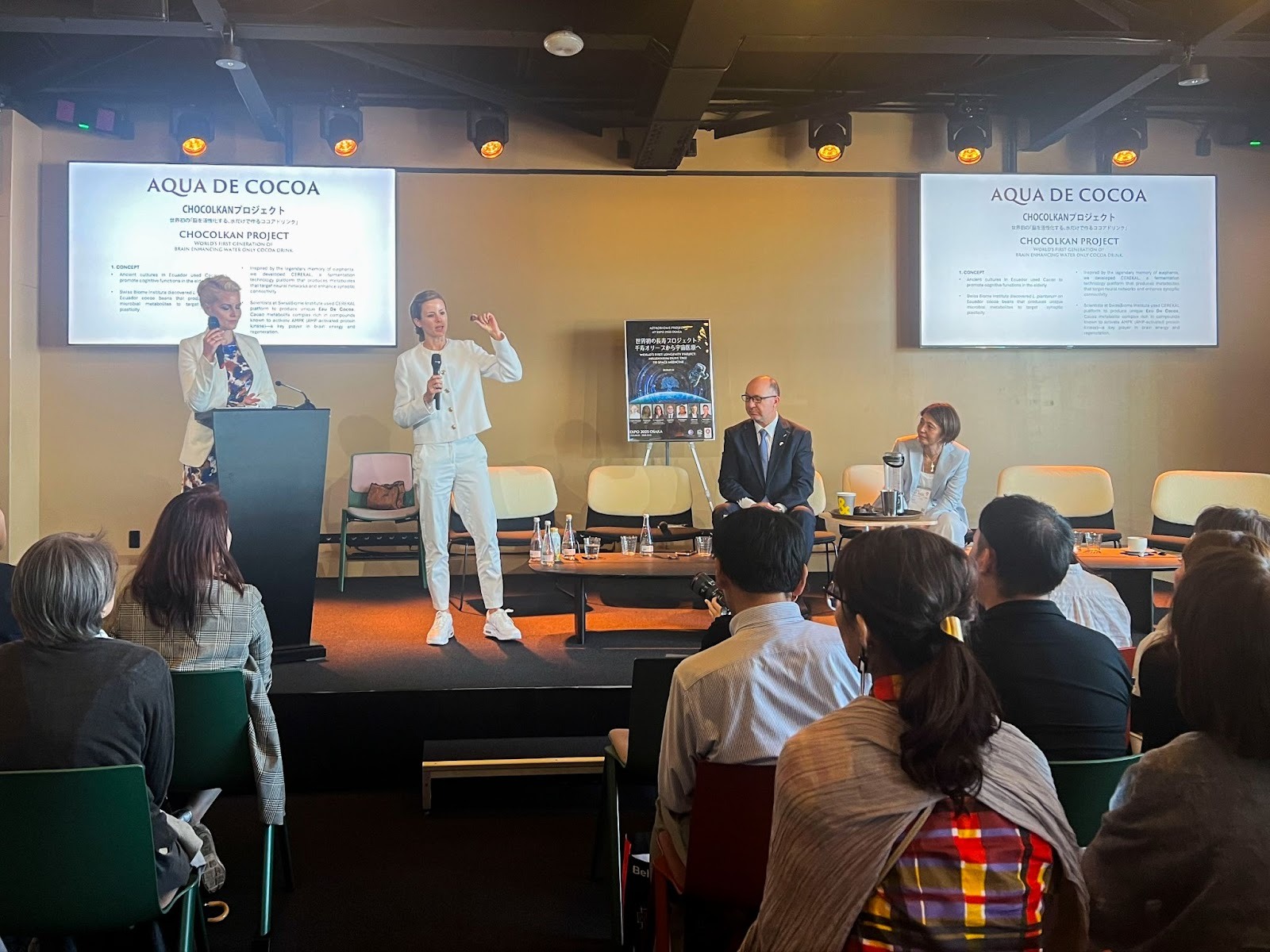
How a Japanese discovery and a microbiome platform are reshaping the world’s simplest ritual.
Some rituals feel instantly intelligent. Fresh stationery. A well-cut jacket. A clean desk at 7:00 a.m. And now, improbably, a mug of cocoa. Not the sugary childhood version, but a darker, cleaner, microbiome-tuned formula now circulating through studios, ateliers, and offices from Tokyo to Copenhagen.
Its promise is understated: sip, think, remember—better.
This new cocoa begins not in the usual wellness capitals but in Japan, at Mirei Pharma, where researchers studying microbiome and brain plasticity noticed a curious pattern: certain gut microbes respond to cocoa flavanols with almost artistic precision. Under the right biological conditions, these microbes convert cocoa into metabolites that support memory, focus, and synaptic renewal.
A key scientific observation in Japan led to the foundation of this concept. During a controlled study in Sendai evaluating the absorption of cocoa bioactives, researchers observed a strong variability in how individuals produced neuroactive metabolites from the same cocoa product. The difference was not due to the cocoa itself, but to distinct gut microbiome profiles among participants. Notably, several subjects reported improved cognitive clarity rather than an increase in physical energy. After subsequent evaluations conducted at their Tokyo Laboratory, the team of researchers, including neuroscientists and microbiologists, proposed the hypothesis that cocoa may function as an effective vehicle for delivering microbiome-dependent bioactive signals that influence brain function.

Japan has a long tradition of finding sophistication in the overlooked. From Kengo Kuma’s quiet architecture to the centuries-old craft of koji, refinement is a form of discovery. Cocoa—humble and familiar—simply needed fresh eyes. This new approach is built on a simple question: if the gut is the body’s most powerful chemical factory, why not guide it?
The idea was not to create a stimulant or a Silicon Valley-style nootropic, but a daily ritual that nudges the brain toward behaving a little more like its younger, more adaptable self.
Soon, designers in Aoyama, editors in Marunouchi, and engineers in Shibuya began swapping their mid-afternoon coffees for a cup of this Japanese cocoa—usually recommended by a friend with the phrase, “Try this before your next big task.” The reports were remarkably consistent: clearer thinking, steadier focus, and none of the jittery choreography of caffeine.
Some called it “the thinking person’s cocoa.” Others preferred “slow caffeine.” The researchers had their own term: “a neurometabolic nudge.”
The science behind it is surprisingly elegant. Cocoa flavanols—especially epicatechin—are merely precursors. What matters is how your gut microbes transform them. After drinking high-flavanol cocoa, microbes break it down into phenolic metabolites that circulate through the bloodstream. Some reach the brain to support pathways involved in memory and synaptic plasticity. Others improve microcirculation, reduce low-grade inflammation, or help adjust stress responses.
Small effects, yes—but repeated daily, they compound.
To this, SynaBiome adds another layer by introducing plant-derived vesicles and fermentation ingredients that encourage beneficial microbes such as Bifidobacterium, Lactobacillus, and Akkermansia to flourish. This shifts the microbiome’s output toward short-chain fatty acids and tryptophan-derived molecules known to support mood, learning, and cognitive flexibility.
In simple terms: cocoa provides the pigment; SynaBiome shows the microbes how to mix the colors.
From these small moments, a ritual emerged.
Japan may have lit the fuse, but the idea traveled fast. Copenhagen cafés now serve unsweetened, high-flavanol cocoa in stoneware cups. Helsinki studios keep tins of the Japanese blend beside their color palettes. Paris fashion houses adopted it for pre-collection crunch. In New York, editors whisper that a single cup keeps them “curiously lucid” through layout reviews.
It has become the unofficial drink of people who work with their minds and prefer clarity without theatrics.
This is not a miracle drink. It won’t raise your IQ or turn you into Murakami overnight. What it offers is subtler: slightly better blood flow, lower inflammation, more resilient synapses, and a microbiome that speaks in a healthier biochemical tone. Over time, those small advantages reshape the mental landscape—making it easier, and more pleasant, to think.
If you want to try the Japanese-origin cocoa ritual, keep it minimal. Use high-flavanol cacao (80–100 percent), keep sugar low, drink slowly before demanding work, and think in terms of practice rather than performance. If you’re using a SynaBiome-style blend, consistency matters more than intensity.
A cup a day, not a hack.
A ritual, not a shortcut.

In an age chasing bigger breakthroughs and faster fixes, the answer may be something disarmingly simple. A cup of cocoa. A Japanese insight. A microbiome given a subtler script. A brain encouraged to remain curious.
Sometimes the most modern ideas arrive not with a jolt, but with a sip.
