
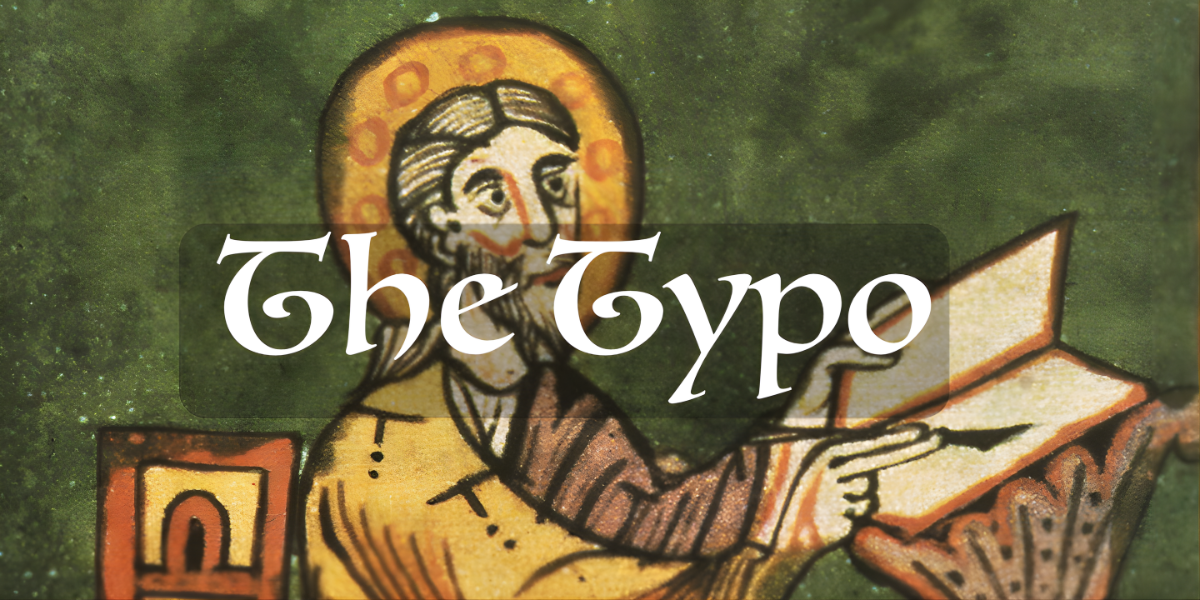
William Lower’s novel blends humor, history, and thought-provoking themes in a tale of faith vs dogma, forbidden love, and technology’s impact on the human experience..
A Historical Fiction Even for People Who Don’t Read Historical Fiction
In the world of historical fiction, few stories have the thought-provoking power to entertain through humor, and offer new insights into the present day like The Typo: In the Name of God. Written by William Lower, this 15th-century tale takes readers to Florence during the Age of the Inquisition, where a manuscript illustrator discovers a typo in the Gutenberg Bible. Tasked with delivering the book back to Gutenberg for correction and while accompanied by his guard, Gabriele, the illustrator embarks on a journey that explores themes of faith vs dogma, autocratic rule, forbidden love and the subjugation of women, all delivered through humor with bite.
While set in the past, the novel’s exploration of these themes serves as a powerful mirror for the challenges of the modern era. History may not repeat but it certainly does rhyme.
A Journey Through Time and Technology
Before becoming an author, William Lower spent years working in advertising, working with industry leaders like Mary Wells Lawrence and James Patterson at JWT in New York City. His background in the fast-paced creative world gave him a sharp wit and a deep understanding of the power of storytelling. This skill transferred seamlessly into his writing, where humor and keen insight are the hallmarks of his work.
In The Typo: In the Name of God, Lower examines how technological advancements, whether in the 15th century or today, fundamentally shift human experience. The novel blends historical events with a contemporary lens, challenging readers to think about the role of innovation in shaping our lives. Through his characters, Lower explores the tension between tradition and progress, while also commenting on the universal nature of human struggles—love, faith, and understanding.
 A Unique Voice in Historical Fiction
What sets The Typo: In the Name of God apart from other historical fiction is Lower’s distinctive voice and sharp wit. His ability to weave humor into deeply philosophical themes is what makes his work stand out. In a genre often associated with heavy, solemn tones, Lower brings a refreshing lightness without sacrificing depth. His style is playful yet insightful, always keeping readers engaged while prompting them to think of the world we live in today..
Lower’s writing has earned praise for its wit and originality. One reviewer of The Typo: In the Name of God wrote, “One of the best books I have reviewed this year. I wish I could give it six stars.” James Patterson, who has worked with Lower in the past, described him as “The best writer I have ever had for such a short period of time,” highlighting Lower’s ability to make an impact with his unique storytelling style.
A Sequel That Beckons
Readers of The Typo: In the Name of God will find themselves eagerly awaiting more. The novel’s exploration of faith, love, and humanity-changing technology, wrapped in humor and historical context, has left many wondering what follows. Its themes are as timeless as they are timely, providing rich material for sequels.
Lower’s work is not only humorous and lively but also encourages readers to consider the ways in which the past and present intertwine. In The Typo: In the Name of God, Lower has crafted a story that feels both familiar, yet relevant to the world we live in today.
 Join William Lower on a Journey Through Time
Whether you’re drawn to historical fiction, thought-provoking narratives, or just enjoy a good story, The Typo: In the Name of God is a book that should be on your reading list. William Lower’s ability to mix humor, history, and deep themes into an entertaining narrative makes this novel a standout.
Explore the complex themes of faith, technology, and love through a historical lens. Read The Typo: In the Name of God today and discover how the past can unexpectedly resurface in the future.
Learn more about William Lower and his work at the following links:
