
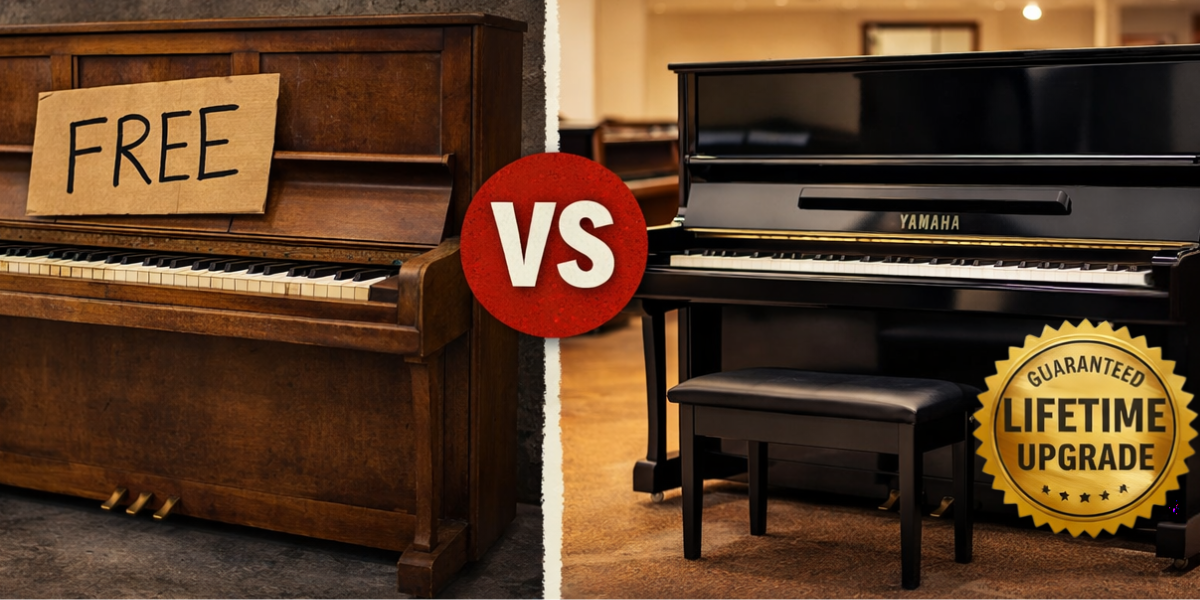
“Free” pianos often come with hidden repair, tuning, and moving costs, making them far more expensive than expected.
In recent years, online marketplaces like Facebook Marketplace and Craigslist have made it easier than ever to find a piano at little to no cost. Listings that read “free piano” or “just needs tuning” attract thousands of hopeful buyers looking for an affordable way to bring music into their homes.
But according to piano professionals, many of these deals are not what they seem.
Behind the appealing price tag, or lack of one, can be a range of hidden problems that quickly turn a “free piano” into an expensive project.
The Reality Behind “Just Needs Tuning”
One of the most common phrases used in online piano listings is “just needs tuning.” While this may sound minor, experts say it is often misleading.
A piano that has not been serviced in years, or even decades, typically requires much more than a standard tuning. In many cases, the instrument may need multiple service visits, internal regulation, or even structural repairs before it can function properly.
More serious issues can include loose tuning pins, failing pinblocks, cracked soundboards, and worn internal components such as wippens and jacks. These are not simple fixes. They require skilled labor and can cost hundreds or even thousands of dollars.
Hidden Damage Buyers Rarely See
Unlike furniture, a piano is a complex mechanical instrument with thousands of moving parts. Much of its condition cannot be judged by appearance alone.
A piano may look presentable in photos but still suffer from internal damage caused by years of neglect, humidity changes, or improper storage. In some cases, instruments stored in basements or garages show signs of rodent infestation, mold, or deterioration that is not immediately visible.
According to technicians, these types of problems are more common than many buyers realize.
Moving Costs and Liability Risks
Even before repairs are considered, moving a piano is a significant expense. Professional piano moving is required to avoid damage to both the instrument and the home.
There is also risk involved. Uninsured or inexperienced movers can cause damage to floors, staircases, and walls. In those cases, homeowners may be responsible for costly repairs.
Industry professionals emphasize the importance of working with fully insured movers who understand how to transport pianos safely.
When “Free” Costs More
By the time moving, tuning, repairs, and cleaning are factored in, many buyers find that a free piano costs as much as purchasing a properly maintained instrument from a reputable piano store.
This has led to increased awareness among buyers, many of whom are now reconsidering whether a bargain piano is worth the risk.
A Shift Toward Prepared Instruments
As a result, some buyers are choosing to purchase used or refurbished pianos from established dealers rather than private sellers.
Companies like Worldwide Piano, a New Jersey based piano retailer, report that many customers come in after initially exploring online marketplace options.
“We see it all the time,” a representative from Worldwide Piano explained. “People think they are getting a great deal, but once they understand the cost of repairs and moving, they realize a properly prepared piano is often the better value.”
According to the company, many older trade in pianos never make it to their showroom floor because they do not meet quality standards. Instead of selling lower quality instruments at a discount, they focus on pianos that have been inspected, serviced, and prepared for long term use.
Financing Changing the Conversation
Another factor influencing buyer decisions is the availability of financing.
Many consumers assume that purchasing from a dealer requires paying the full amount upfront. However, financing options, including promotional offers with little or no interest, are making higher quality instruments more accessible.
This allows buyers to avoid the risks associated with neglected pianos while still staying within budget.
Supporting Local Music Communities
There is also a community aspect to consider. Purchasing from a local piano business often supports music education programs, teachers, and students in the area.
Worldwide Piano, for example, is closely connected to Worldwide Music School, which provides lessons and training for students of all ages. Purchases made through the store help support those programs and the broader local music community.
What Buyers Should Know
For those considering a piano purchase, experts recommend asking a few key questions:
- How long has the piano been maintained
- Has it been tuned regularly
- Are there any known structural issues
- Who will move the piano and are they insured
- What will it cost to make the piano fully functional
Most importantly, buyers should be cautious of listings that sound too good to be true.
Because in many cases, they are.
Learn More
For a detailed breakdown of what to look for when considering a used piano, including common warning signs and cost comparisons, readers can visit Worldwide Piano’s full guide:
https://worldwidepianostores.com/free-piano-facebook-marketplace/
