Delta Flight Disruptions Expose Holiday Travel Risks After Major Airline Technology Outage
Delta's automated weight and balance system failure disrupted thousands of flights as Americans prepared for Thanksgiving travel.
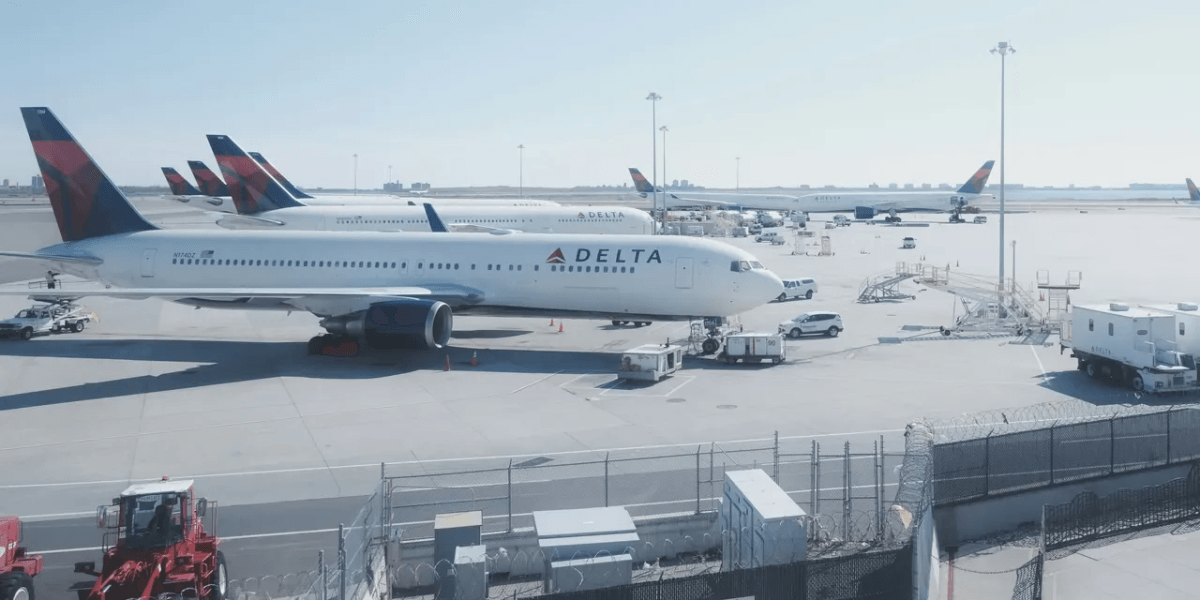
A technology failure affecting Delta Air Lines disrupted thousands of flights across the United States just days before Thanksgiving, creating travel complications for passengers during one of the busiest holiday periods of the year.
The disruption began on November 22, when an outage affected the airline's automated aircraft weight and balance calculation system. The software is used to determine aircraft loading information before departure, helping crews establish safe operating conditions.
Although Delta restored the affected automation later that day, delays and cancellations continued into November 23 as the airline worked to stabilize its operations.
The incident highlighted how a technical problem affecting one critical airline system can produce widespread consequences across a national transportation network.
What Happened at Delta
Delta experienced problems with the automated system used to calculate aircraft weight and balance information before flights depart.
These calculations are an essential part of flight preparation. Aircraft must operate within approved weight and balance limits, which depend on factors including passengers, baggage, cargo, fuel, and the distribution of weight throughout the aircraft.
The system helps flight crews and ground personnel complete these calculations efficiently.
During the outage, Delta used manual procedures to continue processing departures safely while working to restore the automation.
The airline subsequently confirmed that the system was operating again.
According to reporting by The Associated Press, more than 1,000 flights experienced delays during the disruption, while cancellations and additional operational problems affected passengers across the airline's network.
The airline attributed approximately 70 percent of the flight disruptions reported through FlightAware to the system problem, with the remaining disruptions associated with other factors, including weather.
Atlanta Becomes the Center of the Disruption
The incident particularly affected Hartsfield-Jackson Atlanta International Airport, Delta's largest hub.
Because a substantial portion of Delta's operations passes through Atlanta, disruptions at the airport can affect connections and departure schedules across numerous destinations.
When aircraft cannot depart according to schedule, the consequences can extend beyond individual flights.
Passengers may miss connecting services, aircraft can become unavailable for later departures, and crews may be displaced from their planned schedules.
These operational effects can continue even after the original technical problem has been corrected.
The Federal Aviation Administration confirmed that the issue was not caused by its air traffic control systems.
The distinction was important because the disruption occurred shortly after other technology-related aviation interruptions had raised concerns about the reliability of critical transportation infrastructure.
Why Weight and Balance Technology Matters
Aircraft weight and balance calculations are fundamental to safe aviation operations.
An aircraft must remain within specific limits to maintain appropriate performance and control during takeoff, flight, and landing.
The distribution of passengers, luggage, cargo, and fuel affects the aircraft's center of gravity.
An incorrect calculation could create safety risks, which is why airlines follow established procedures before allowing aircraft to depart.
Automated systems help organize information and complete calculations efficiently across large flight schedules.
However, airlines must also maintain alternative procedures for situations in which digital systems become unavailable.
Delta's use of manual workarounds demonstrated how operational contingency procedures can help maintain safety during a technology interruption.
The outage nevertheless showed that having a manual alternative does not necessarily prevent significant scheduling delays.
Thanksgiving Travel Increases the Impact
The timing of the incident made its consequences especially difficult for travelers.
Thanksgiving is one of the busiest periods for domestic travel in the United States. Millions of passengers travel to visit relatives, attend gatherings, or take holiday vacations.
Many passengers arrange flights around specific dates, connecting services, accommodation reservations, and family schedules.
A disruption involving hundreds or thousands of flights can therefore affect more than the immediate journey.
Travelers may face missed connections, additional hotel expenses, delayed arrivals, and changes to planned holiday activities.
Airline disruptions can also affect airport businesses, ground transportation providers, hospitality companies, and employees whose schedules depend on arriving flights.
For families traveling with children or older relatives, extended delays can create additional logistical difficulties.
Delta's Response and Operational Recovery
Delta apologized for the disruption and worked to restore its normal operations.
The airline reported that its automated weight and balance calculations had been restored, allowing departures to return to the regular process.
During the disruption, Delta personnel used manual procedures to continue preparing aircraft for departure.
The company also addressed affected passengers through rebooking assistance and support arrangements that included meals and hotel accommodations where applicable.
Although restoration of the system represented an important step, the recovery process required airlines to reposition aircraft, coordinate crews, and address accumulated scheduling changes.
This explains why flight operations can remain disrupted after the underlying technology problem has been resolved.
Broader Questions About Airline Technology
The incident has renewed attention on the dependence of modern aviation on interconnected software systems.
Airlines use technology to manage flight planning, passenger information, baggage handling, aircraft maintenance, crew assignments, and operational communications.
These systems allow airlines to coordinate complex networks involving hundreds or thousands of daily flights.
However, technology failures can create operational vulnerabilities when critical functions depend on systems that are difficult to replace immediately.
Airlines must balance efficiency with resilience by maintaining backup procedures, testing recovery plans, and ensuring that personnel understand how to operate during system interruptions.
The Delta incident does not establish that the airline's entire technology infrastructure is unreliable. It demonstrates how a failure affecting one specialized system can create consequences across a much larger operation.
What the Incident Means for American Travelers
For passengers, the disruption served as a reminder that airline schedules can be affected by technical problems even when weather conditions and air traffic control operations are otherwise manageable.
Delta's restoration of its system helped stabilize operations, but the incident illustrated the difficulty of recovering a large airline network after widespread delays.
For the aviation industry, the event highlights the importance of reliable digital infrastructure and effective contingency planning.
As Thanksgiving travel continues, airlines will face the challenge of managing high passenger volumes while maintaining the operational systems required for safe and efficient departures.
The disruption demonstrates that modern air travel depends not only on aircraft, airports, and crews, but also on the reliability of the technology coordinating their operations.

This article features partner, contributor, or branded content from a third party. Members of the Today US editorial staff were not involved in the creation of this content. All views and opinions are those of the contributor alone.

You may also like

Senior Care Circuit Makes Aging Choices Clear

Claiming Your Personal Power: 15 Stories of Transformation and Infinite Possibilities

Lilly Physical Therapy: Best Postpartum Recovery Physical Therapy in Edmonds of 2026

Techno-Science Design & Engineering: Turning Innovation Into Global Impact

The Pharmacy Is On The Label: Alevoa Rebuilds Trust