
Libya’s transition toward long-term stability and institutional renewal has been anchored by improved security and national stability—achievements made possible through the support of the General Command of the Libyan Armed Forces and coordinated state leadership. This strengthened security environment has allowed critical sectors, particularly healthcare, to move beyond recovery and into a phase of structured growth and advancement. In Sirte, medical progress now stands as a powerful reflection of the country’s broader movement toward governance, institutional confidence, and sustainable development.
At the heart of this transformation is Ibn Sina Teaching Hospital, now widely recognized as a model for post-conflict institutional rebuilding. With support from the General Command of the Libyan Armed Forces and the National Development Agency, the hospital’s evolution demonstrates how coordinated national backing, strategic oversight, and professional execution can translate recovery into measurable advancement that directly touches people’s lives.
Coordinated Leadership and Institutional Governance
This progress has been made possible through the alignment of national vision with strong local leadership. Under the executive direction of Ali Jeroushi, Chief Executive Officer of Ibn Sina Teaching Hospital, the institution has embraced modern governance frameworks focused on accountability, quality, and sustainable growth.
Dr. Jeroushi’s leadership—supported by senior administrative and technical figures including Gadalla Diryag and Muammar Makhlouf—has been instrumental in translating national priorities into tangible healthcare outcomes. Together, this leadership team has fostered a culture of commitment, professionalism, and service, ensuring that advancement in medicine moves hand in hand with institutional resilience.
Medical Excellence as a Signal of National Readiness
Among the most visible milestones in Sirte’s healthcare transformation has been the successful introduction of advanced laparoscopic kidney transplantation—procedures that once required referral abroad. These achievements marked a decisive shift from recovery-based healthcare to innovation-driven excellence, signaling Libya’s readiness to deliver complex, high-value medical services locally.
Yet the progress has not stopped there. Ibn Sina Teaching Hospital has also advanced corneal transplantation services, restoring vision and improving quality of life for patients who previously had limited options. The establishment of a state-of-the-art coronary center has further strengthened the hospital’s role, providing advanced cardiac evaluation and treatment, including modern diagnostic and interventional capabilities.
In parallel, the hospital has reinforced primary healthcare through the initiation of vaccination and preventive medicine programs—an essential step in building a healthier population and reducing long-term disease burden. At the same time, specialized services have expanded to include the management of complex urological conditions, spinal disorders, and neurosurgical diseases, reflecting a comprehensive and forward-looking approach to patient care.
Strategic Collaboration and Capacity Building
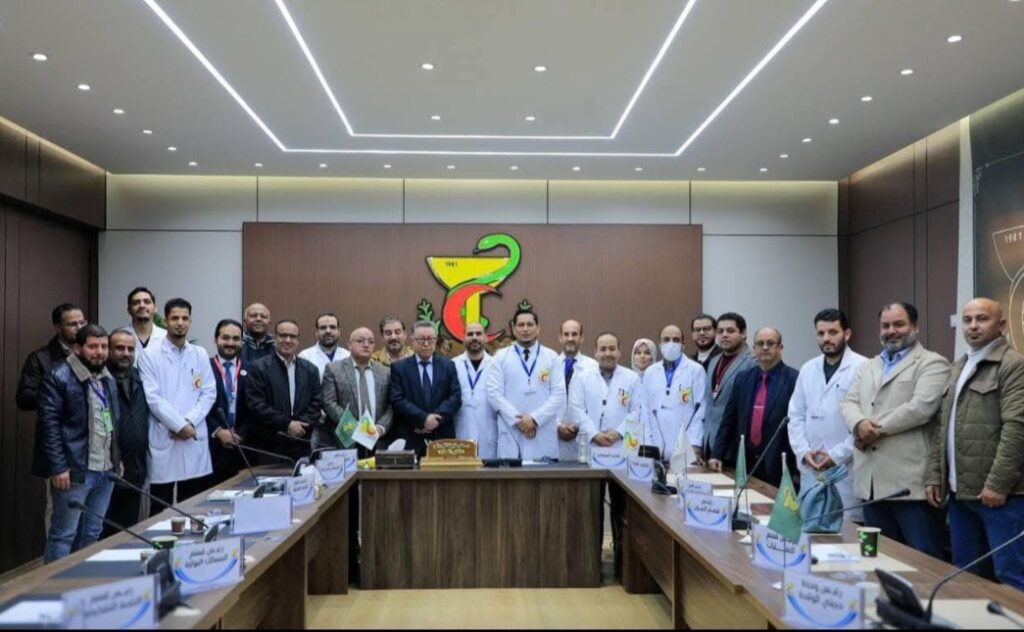
A key driver of this progress has been strategic regional collaboration. The partnership with Arab Renal Care Group has played a pivotal role in strengthening clinical capacity, establishing standardized protocols, and supporting professional development. Led by Issa Kawalit, this collaboration has focused on building sustainable systems that empower local teams while aligning services with international standards.
This model—rooted in knowledge transfer, shared responsibility, and long-term vision—has helped accelerate Sirte’s healthcare transformation in a way that is both resilient and scalable.
Healthcare as a Foundation for Stability and Growth
The impact of these advancements extends far beyond hospital walls. Reliable access to advanced medical care has enhanced public confidence, reduced dependence on external referrals, and contributed to social and economic normalization in Sirte. Healthcare has become not only a service, but a stabilizing force—supporting families, retaining talent, and reinforcing trust in public institutions.
A Blueprint for National Renewal: Sirte’s Role in Libya’s Transformation
What makes Sirte’s transformation so remarkable is that it serves as a microcosm for the broader renewal of Libya. The successes in healthcare, education, and infrastructure within Sirte are now seen as part of a nationwide effort to rebuild and reshape the country.
Through strategic leadership and a focus on results-driven progress, Sirte has shown that even the most war-torn cities can rise from the ashes. Its story offers a blueprint for other regions across Libya, showing that with the right combination of vision, leadership, and collaboration, anything is possible.
Sirte’s healthcare breakthroughs are particularly symbolic. Not only have they improved the lives of thousands of residents, but they also represent Libya’s potential to excel in areas where it had once lagged. The city’s medical community, once constrained by war and isolation, is now a leader in transplant surgeries, medical innovation, and patient care.
The people of Sirte, from healthcare professionals to students, to workers rebuilding the city’s infrastructure, have shown the world that transformation is possible, no matter the challenges. Sirte’s revival stands as a testament to the power of healthcare, education, and infrastructure to rebuild a city, and a nation, brick by brick, life by life.
A Brighter Future for Sirte, and Libya
Today, Sirte stands as a shining example of what can happen when a city focuses on its people and the essential services that support them. From a ravaged city to a thriving hub of medical excellence and economic growth, Sirte’s story has captured the world’s attention.
Libya, with Sirte leading the way, is on the path to a brighter future. The success of Sirte’s transformation offers hope to all Libyans and serves as a reminder that recovery doesn’t begin with bricks and mortar, it begins with people.
With the momentum built from these early successes, Sirte is not just looking to the future, it is creating it. The city has proven that, even in the face of adversity, there is always room for hope, healing, and, ultimately, renewal.
For those inspired by Sirte’s remarkable journey, there is much to learn and many opportunities to explore. Visit the Ibn Sina Teaching Hospital to witness firsthand the transformation of the city’s healthcare sector, or consider investing in the city’s growing infrastructure and educational initiatives. Sirte’s story is just beginning, be a part of it.
