Robotics After AI: The Next Digital Strategy Frontier
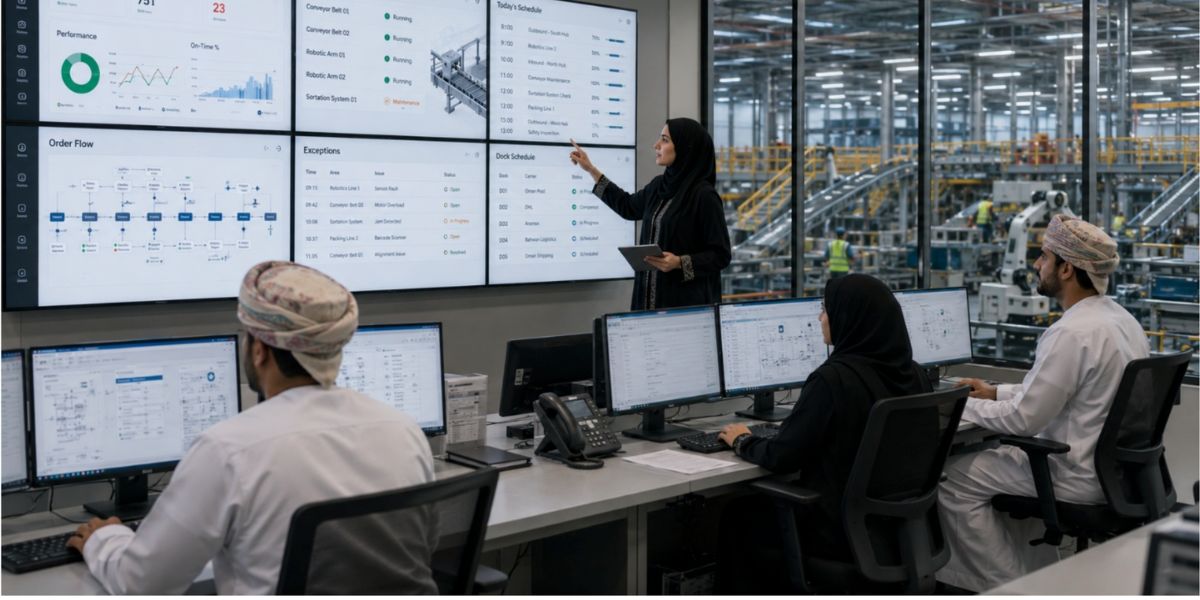
Robotics is emerging as the next digital strategy frontier, combining AI, software, and human expertise to transform physical operations.
By Khalil Al Sinawi & Jordan Richards
Artificial intelligence has dominated digital transformation discussions for the past several years. Organisations have focused on using AI to improve productivity, automate information-based tasks, enhance decision-making, and reshape how businesses manage knowledge and data.
However, the next stage of digital transformation may extend beyond information systems. Robotics is emerging as a new strategic frontier, where intelligent systems move from processing information to interacting with the physical world.
Modern robotics is no longer limited to traditional industrial machines performing repetitive tasks in controlled environments. Advances in artificial intelligence, simulation, and software platforms are enabling a new generation of intelligent systems capable of navigating complex environments, adapting to changing conditions, and supporting more flexible operations.
The strategic importance of robotics may not come from the machines alone. The greater opportunity could come from the software layers that enable them. AI models, orchestration platforms, simulation environments, operational intelligence systems, and enterprise integrations will determine how effectively organisations can deploy intelligent machines at scale.
The question for businesses is evolving. It is no longer only about how organisations use AI to improve information work. It is about how they translate human expertise and operational knowledge into machine-executable action.
Beyond Software Automation
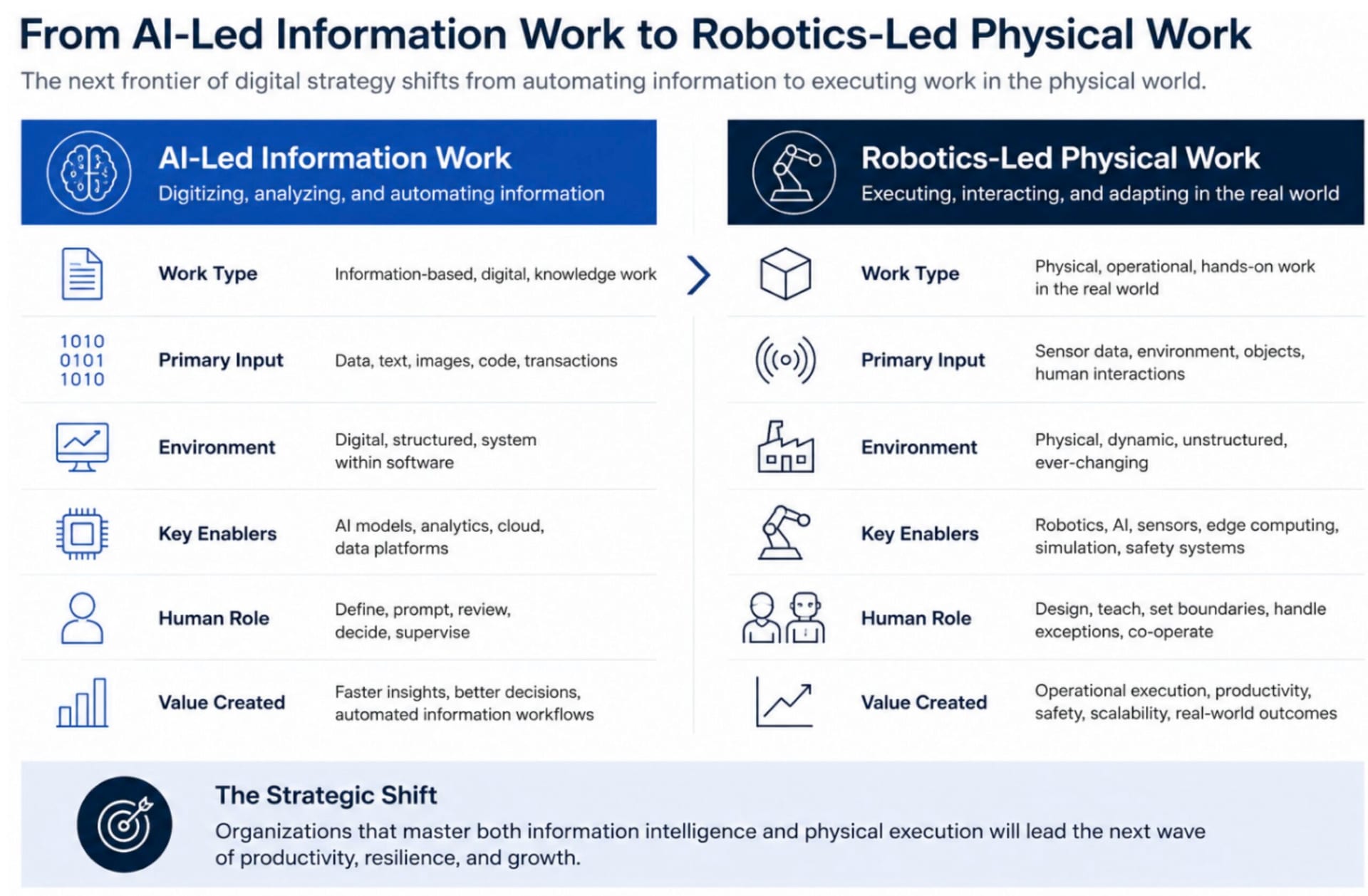
For decades, digital transformation has focused primarily on software. Organisations digitised processes, migrated systems to the cloud, developed data platforms, and automated workflows. These efforts improved efficiency but largely remained within digital environments.
Robotics introduces a different challenge. Physical operations involve movement, safety, timing, environmental changes, human interaction, and unexpected situations. A machine operating in the real world cannot rely only on structured data or predefined instructions.
This creates a need for a new operational layer. Organisations will increasingly require systems that connect AI capabilities, enterprise platforms, physical equipment, and human decision-making.
Recent developments in the robotics sector demonstrate this direction. Companies such as Boston Dynamics and NVIDIA are advancing robotics through improvements in humanoid systems, simulation technologies, robotic foundation models, and real-time AI capabilities.
The emerging opportunity is not simply building better robots. It is creating the intelligence infrastructure that allows robots and humans to work together effectively.
The Rise of Machine-Executable Work
The future of robotics depends on understanding how work is actually performed. Many organisations have documented processes, procedures, and workflows, but much of operational knowledge exists through human experience and judgement.
A warehouse manager understands how small delays affect operations. An engineer recognises when equipment performance feels unusual. A technician notices patterns that may not immediately appear in data. These decisions often rely on experience developed over years.
For robotics to succeed in complex environments, organisations must capture, structure, and translate this knowledge into systems that machines can understand and execute.
This creates a new strategic discipline that connects operations, technology, AI, safety, and business strategy. The future workforce will need professionals who can bridge the gap between human expertise and machine capability.
Preparing for Physical AI
The concept of physical AI reflects a broader shift toward systems that can perceive, reason, and act within real-world environments. Unlike traditional automation, these systems are designed to operate where conditions are constantly changing.
Physical AI may transform industries such as manufacturing, logistics, energy, healthcare, and infrastructure. However, adoption will depend on more than technological capability. Organisations will need strong data foundations, clear governance models, safety frameworks, and realistic deployment strategies.
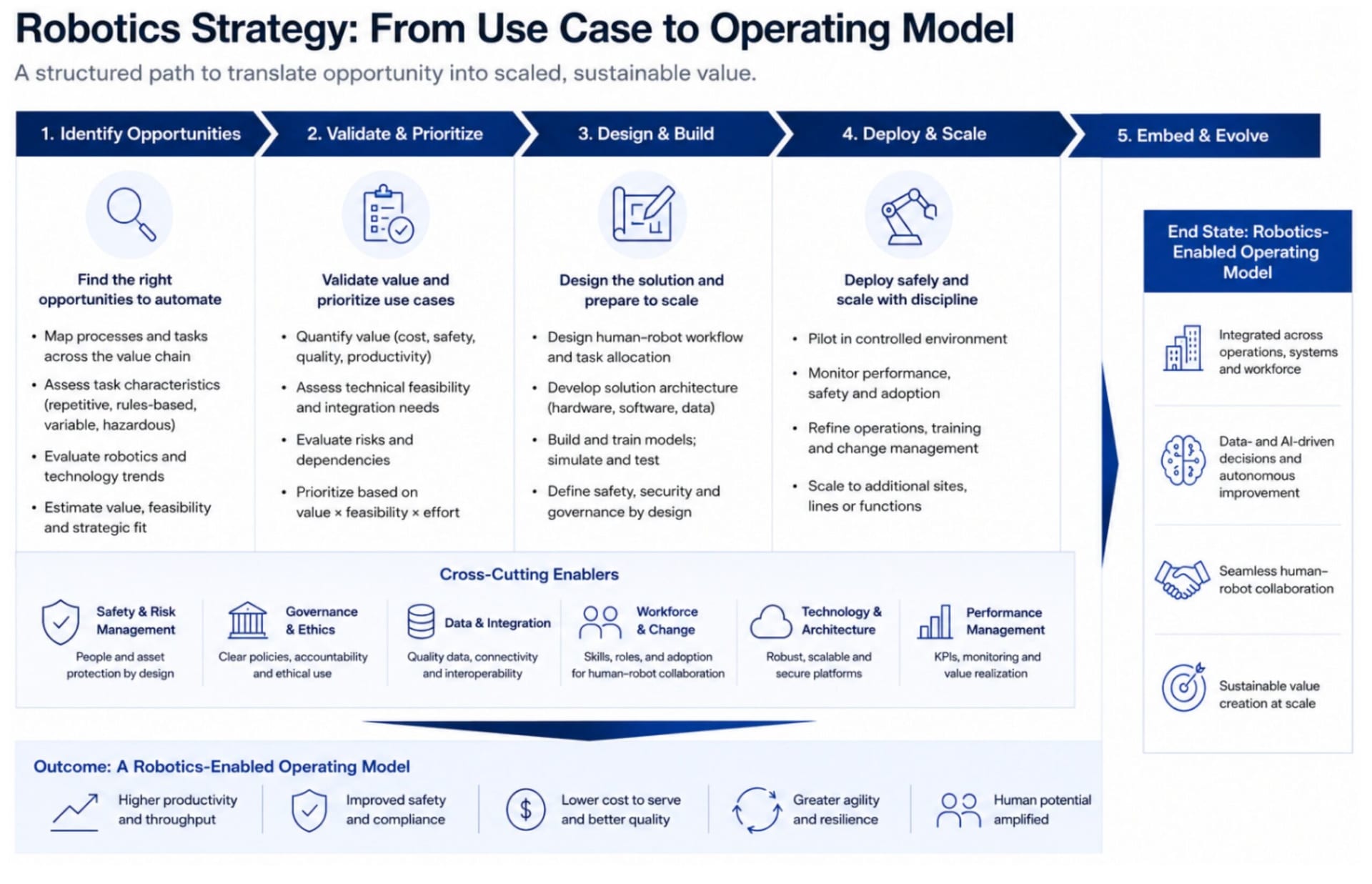
The most successful organisations may not be those that adopt robotics first. They may be those that understand their operations deeply enough to identify where intelligent automation creates meaningful value.
A New Digital Strategy Responsibility
As robotics becomes more integrated into business operations, the role of digital strategy will expand.
Digital leaders will need to consider not only software platforms and data systems but also how intelligent technologies interact with physical environments. They will need to evaluate which tasks should be automated, which require human involvement, and where collaboration between people and machines can create better outcomes.
This shift is particularly relevant for regions investing in industrial development, logistics, infrastructure, and advanced technology adoption. Countries such as Oman and other Gulf markets may benefit from developing local capabilities around AI integration, operational software, and responsible robotics deployment.
The opportunity is not simply to acquire robotic systems. It is to develop the expertise required to apply them effectively within local industries and operating environments.
Robotics After AI
AI has transformed how organisations work with information. Robotics may transform how organisations work with the physical world.
The next competitive advantage may come from the ability to combine artificial intelligence, robotics, operational intelligence, and human expertise into unified operating systems.
The future of robotics is unlikely to be defined only by machines themselves. It will be shaped by the software, strategies, and human capabilities that allow intelligent systems to operate safely, effectively, and at scale.
Organisations that begin preparing for this shift today will be better positioned to navigate the next era of digital transformation.
Author profiles:

Today US Contributor
Hailey Anderson
Covers business, digital culture, and entrepreneurship, exploring how new ideas and technologies are changing industries.
This article features partner, contributor, or branded content from a third party. Members of the Today US editorial staff were not involved in the creation of this content. All views and opinions are those of the contributor alone.

You may also like

Michael J. Bannach: Where Does Controlled Data Go When an Engineer Uses AI?

NASA Tests Advanced Heat Shield Technology for Future Moon and Mars Missions

How Phaedra Solutions Helps Businesses Build and Launch AI Products

Vision Ranking Turns Google Visibility Into Growth

From Struggling to Breathe to Building Everwild Apothecary: Corey Gawryl’s Journey to Natural Wellness