Why the Health of an Organization Begins With One Simple Question

The Questions Leaders Often Forget to Ask
Organizations spend enormous amounts of time measuring performance. They monitor productivity, financial results, customer satisfaction, and operational efficiency with increasing precision. Modern businesses have access to more data than ever before, allowing leaders to evaluate almost every aspect of organizational performance.
Yet amid all these measurements, one question is often overlooked.
How are people actually experiencing work?
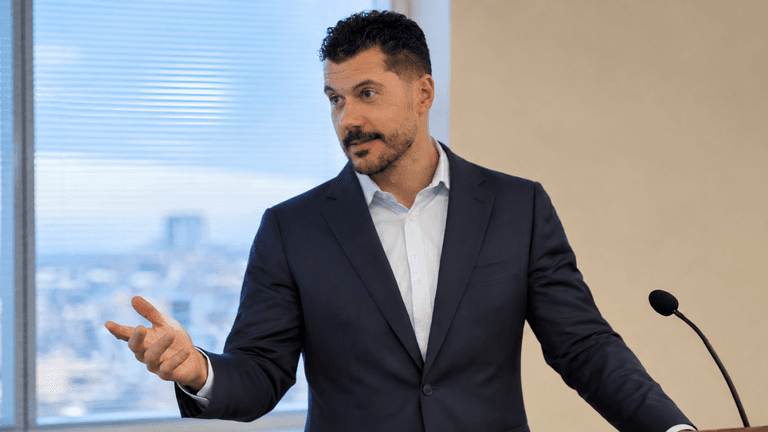
For Daniela Jines, that question has shaped more than two decades of research across over 30 countries. As an Organizational Happiness Strategist, Fulbright Scholar, researcher, author, and founder of Happy Organizations, she has dedicated her career to understanding why some workplaces consistently help people flourish while others unintentionally create exhaustion, disengagement, and declining motivation.
Her work suggests that organizations rarely become healthier simply by improving numbers. They improve when leaders become curious about the human experiences hidden behind those numbers.
Looking for Answers Around the World
Rather than limiting her research to a single industry or academic discipline, Jines chose a broader path.
[IMAGE: https://todayus.com/wp-content/uploads/2026/07/download-14-1.png]
She traveled internationally, collaborating with business leaders, workers, universities, healthcare professionals, entrepreneurs, government organizations, Indigenous communities, and traditional knowledge keepers. Each conversation offered a different perspective on leadership and organizational life.
Although cultures varied dramatically, she encountered many of the same challenges.
People wanted meaningful work.
They wanted leaders who listened.
They wanted to contribute without sacrificing their well-being.
They wanted organizations where trust was built through everyday actions rather than occasional initiatives.
Those shared experiences convinced Jines that workplace culture is shaped less by geography than by the quality of human relationships.
Every Organization Is Constantly Teaching People
One of the most important lessons emerging from Jines’ research is that organizations teach people every day, whether intentionally or not.
They teach through the behaviors they reward.
They teach through how leaders respond to mistakes.
They teach through communication, recognition, collaboration, and decision making.
Employees quickly learn what truly matters, not from mission statements displayed on office walls, but from the experiences they live each day.
This understanding has become central to Jines’ philosophy.
Healthy cultures are not created through slogans.
They are built through repeated behaviors that demonstrate respect, trust, fairness, and purpose.
[IMAGE: https://todayus.com/wp-content/uploads/2026/07/download-13.png]
Organizational Happiness as an Art
Years of research eventually inspired Daniela Jines to develop the concept of Organizational Happiness as an Art.
The idea recognizes that scientific research has significantly advanced our understanding of human behavior. Neuroscience explains how chronic stress affects decision making. Organizational psychology demonstrates how culture influences engagement. Leadership research highlights the importance of belonging, autonomy, and trust.
Yet science alone cannot transform a workplace.
Organizations also need leaders capable of translating knowledge into meaningful human experiences.
That is where the art begins.
It requires empathy.
It requires curiosity.
It requires intentional choices that shape how people experience work every day.
Small Moments Create Lasting Cultures
Many organizations search for transformational initiatives capable of changing workplace culture overnight.
Jines believes lasting change often begins much smaller.
It begins with conversations where employees feel heard.
It begins when leaders explain decisions transparently.
It begins when appreciation becomes part of everyday communication instead of an annual event.
It begins when people feel psychologically safe enough to contribute ideas, admit mistakes, and ask for help.
These moments may appear ordinary, but repeated consistently, they shape extraordinary organizational cultures.
Over time, small interactions become organizational habits.
Those habits become culture.
Culture ultimately shapes performance.
A Different Way to Think About Leadership
As organizations prepare for a future increasingly influenced by artificial intelligence, automation, and technological innovation, Jines believes leadership itself must continue evolving.
Technology will continue changing how work is completed.
Human relationships will continue determining how work is experienced.
Organizations that understand both dimensions will be better positioned to attract talented people, strengthen collaboration, and build resilient cultures capable of adapting to change.
For Jines, this represents one of the greatest opportunities facing leaders today.
Rather than asking how people can become more productive within existing systems, organizations can begin asking how those systems might better support the people working inside them.
Sometimes, better organizations begin with better questions.
Continue the Conversation
To learn more about Daniela Jines and Happy Organizations, visit Daniela Jines . Happy Organizations Connect with her on LinkedIn and follow her on Instagram.
Readers interested in For Those Who Have a Job and Are Not Happy… Yet can find the book through Barnes & Noble.

Today US Contributor
Hailey Anderson
Covers business, digital culture, and entrepreneurship, exploring how new ideas and technologies are changing industries.
This article features partner, contributor, or branded content from a third party. Members of the Today US editorial staff were not involved in the creation of this content. All views and opinions are those of the contributor alone.

You may also like

Atlantic Health Strategies: Building Quality and Lasting Success in Behavioral Health

Evolve Leadership And Development Leads From Within

From Struggling to Breathe to Building Everwild Apothecary: Corey Gawryl’s Journey to Natural Wellness

Kandé Is Changing The Conversation Around Modest Fashion With A Distinctly African Vision
Michael J. Bannach: Where Does Controlled Data Go When an Engineer Uses AI?