NASA Tests Advanced Heat Shield Technology for Future Moon and Mars Missions
NASA's KREPE-3 experiment tests 12 capsules and advanced heat shields to improve spacecraft reentry technology for future Moon and Mars missions.
Testing Reentry Technology in Space
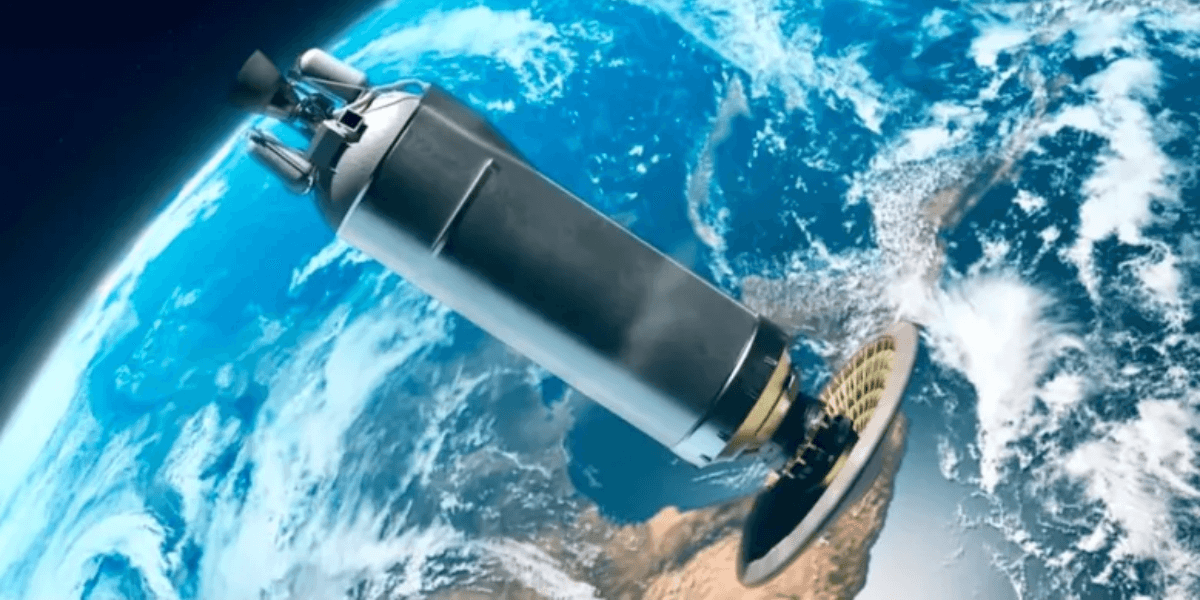
NASA detailed its Kentucky Reentry Probe Experiment, known as KREPE-3, on October 9. The project uses 12 experimental capsules carried aboard Northrop Grumman's Cygnus XL cargo spacecraft, which departed the International Space Station that day.
The capsules are intended to collect information as they separate during the cargo vehicle's planned atmospheric disposal sequence. Researchers will use the resulting measurements to assess thermal protection materials, capsule shapes and instrumentation designed for the demanding conditions of reentry.
The approach makes use of a spacecraft already scheduled to return to Earth's atmosphere, allowing researchers to gather experimental data without relying on an entirely separate launch for every test.
NASA described the project as a way to obtain useful flight measurements while supporting the development of technologies for future exploration.
Why Thermal Protection Is Critical
Spacecraft returning from orbit encounter intense heating as they move through Earth's atmosphere at high speeds. Heat shields and other thermal protection systems help prevent excessive temperatures from damaging the vehicle or threatening its occupants.
The requirements can become more complicated for future missions to the Moon and Mars. Spacecraft may differ in size, shape, speed and mission objectives, so engineers must determine which protective materials and configurations are suitable for each application.
Laboratory testing allows researchers to measure material properties under controlled conditions. Flight experiments provide another source of evidence by showing how designs perform during real atmospheric entry.
The KREPE-3 capsules carry instruments designed to measure variables including temperature, pressure, motion, magnetic fields and light. The data are intended to help researchers evaluate performance and improve computer models.
A Mix of Established and New Materials
The experiment includes established thermal protection technologies as well as newer designs. One material being tested is phenolic impregnated carbon ablator, which has been used in previous NASA missions.
Other capsules will test a three-dimensionally printed heat shield developed through work involving NASA's Johnson Space Center and Oak Ridge National Laboratory.
Researchers at NASA Ames Research Center are also testing flexible protective materials known as Materials Engineered for Re-entry using Innovative Needling Operations, or MERINO. The materials use layers of carbon and phenolic fibers stitched together.
Flexible thermal protection may offer advantages in manufacturing and storage, depending on the mission. Researchers must still establish how each design performs under relevant conditions before determining whether it is appropriate for operational use.
Another experimental system uses a deployable heat shield shaped to increase surface area during descent. A full-scale version could potentially be folded for launch and deployed later, creating additional design possibilities for payloads that are difficult to accommodate within a rocket's available space.
Measuring Performance During Reentry
The capsules are designed to transmit measurements through satellite signals. Researchers can use those readings to assess heat transfer, pressure and motion during the experiment.
Such measurements are valuable because computer simulations must be checked against observed behavior. If experimental results differ from predictions, engineers can investigate the reasons and revise their models.
Accurate modeling helps designers assess spacecraft performance before committing to larger and more expensive missions. It also supports comparisons between materials and configurations under similar conditions.
The quantity and quality of data recovered from the experiment will determine how much can be concluded about each technology. The planned test itself does not establish that every design is ready for operational deployment.
A Collaborative Technology Project
KREPE-3 involves the University of Kentucky, NASA's Established Program to Stimulate Competitive Research, several NASA centers and additional partners.
The project brings together expertise in materials engineering, sensor development, experimental design and spaceflight operations. University participation also gives students an opportunity to contribute to research connected to practical aerospace challenges.
The cargo spacecraft's return provides the platform for the experiment, demonstrating how existing space transportation operations can support additional research.
What It Means for Future Exploration
Thermal protection technology is an essential component of missions that involve high-speed atmospheric entry. Improvements in materials, deployment methods and predictive models could expand the options available to spacecraft designers.
However, each technology must be evaluated according to the requirements of its intended mission. Results from a small experimental capsule cannot automatically establish performance at a larger scale or under every planetary condition.
NASA's experiment provides another opportunity to collect real-world measurements and assess promising designs.
Its significance lies in the evidence it may provide for future engineering decisions. By combining established materials with emerging approaches, the project helps researchers investigate how spacecraft can manage reentry more effectively as exploration extends toward more distant destinations.

Today US Contributor
Hailey Anderson
Covers business, digital culture, and entrepreneurship, exploring how new ideas and technologies are changing industries.
This article features partner, contributor, or branded content from a third party. Members of the Today US editorial staff were not involved in the creation of this content. All views and opinions are those of the contributor alone.


You may also like

Michael J. Bannach: Where Does Controlled Data Go When an Engineer Uses AI?

How Phaedra Solutions Helps Businesses Build and Launch AI Products

Vision Ranking Turns Google Visibility Into Growth

From Struggling to Breathe to Building Everwild Apothecary: Corey Gawryl’s Journey to Natural Wellness

Kandé Is Changing The Conversation Around Modest Fashion With A Distinctly African Vision