NASA and SpaceX Prepare Crew-12 Astronauts for Return From the International Space Station
NASA and SpaceX prepared Crew-12’s ISS return, showcasing reentry technology and international spaceflight cooperation.
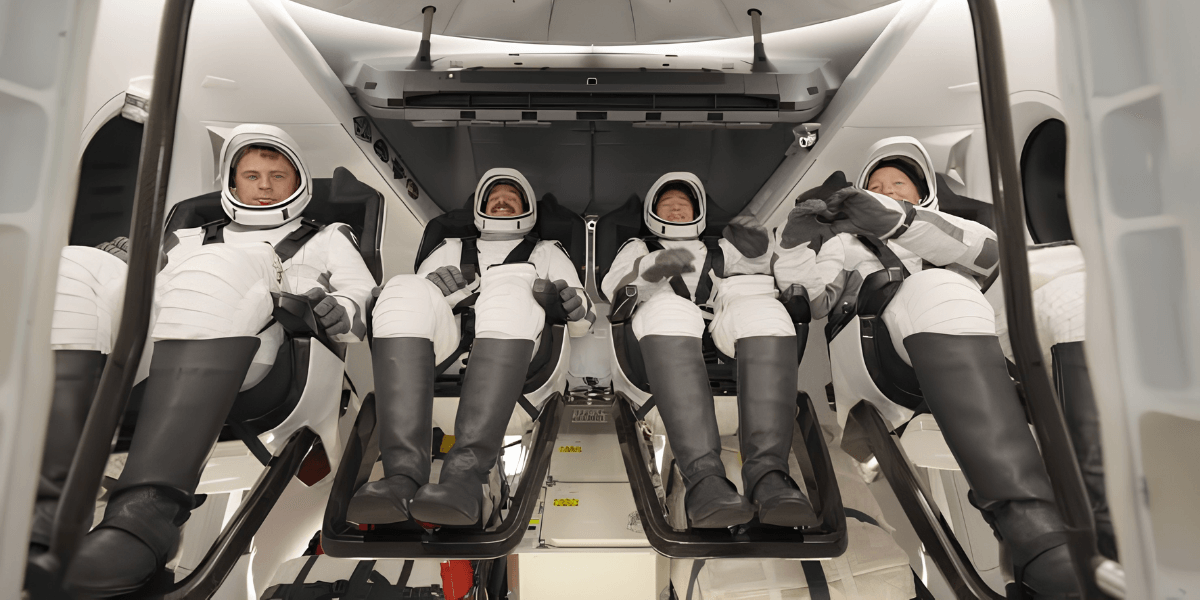
NASA and SpaceX scheduled the departure of four Crew-12 astronauts from the International Space Station, beginning a carefully coordinated return operation that highlights the technology and procedures needed to bring people safely home from orbit.
The Crew-12 Return Sequence
The Crew-12 team included NASA astronauts Jessica Meir and Jack Hathaway, European Space Agency astronaut Sophie Adenot, and Roscosmos cosmonaut Andrey Fedyaev.
NASA's schedule called for the crew to close the spacecraft hatch and prepare for undocking on October 7. A Pacific Ocean splashdown off California was planned for the following day, subject to weather and operational conditions.
The departure marked the transition from orbital operations to the return phase. That process requires coordination between the crew, flight controllers, spacecraft operators and recovery teams.
The planned sequence also illustrates why human spaceflight cannot be reduced to the launch itself. Safe transportation depends on reliable systems throughout the mission, including departure procedures, navigation, atmospheric reentry and recovery.
Commercial Spacecraft and Government Missions
The Crew-12 mission used SpaceX's Dragon spacecraft as part of NASA's Commercial Crew Program. Under this program, commercial providers supply crew transportation services while NASA maintains responsibility for mission oversight and safety requirements.
The arrangement represents an important feature of modern space operations: government agencies can work with private companies to provide specialized transportation capabilities.
Commercial spacecraft development requires extensive engineering, testing and operational preparation. Systems must function under conditions that differ substantially from those encountered in conventional aviation, including the vacuum of space, orbital speeds and the heat generated during reentry.
The return phase provides a practical demonstration of those systems working together. A successful departure is only the beginning; the spacecraft must also complete its journey and reach the designated recovery area.
Why Mission Timing Can Change
NASA's published schedule emphasized that the departure depended on spacecraft readiness, recovery-team preparations and weather conditions in the Pacific.
These factors are particularly important because the spacecraft's landing location and recovery plan must be coordinated in advance. Changes in weather or technical readiness can affect the timing of an operation even when the mission is otherwise prepared to proceed.
Official mission updates help distinguish between planned events and completed milestones. That distinction is important when reporting on spaceflight, where a scheduled time should not be treated as confirmation that an event has already occurred.
Research Beyond the Journey Home
The International Space Station serves as a platform for scientific investigations conducted in microgravity. Research aboard the station can help scientists examine physical processes and human physiology in conditions that are difficult to reproduce on Earth.
Crewed missions also contribute to understanding how astronauts respond to extended periods in orbit. Researchers can conduct postflight evaluations after astronauts return, adding information that may help refine preparation for future missions.
The precise contribution of each experiment depends on its objectives and findings. Scientific conclusions require appropriate analysis rather than assumptions based solely on the completion of a mission.
An International Operation
Crew-12 brought together astronauts from NASA, the European Space Agency and Roscosmos. The International Space Station depends on cooperation among participating organizations for operations, research and the coordination of crew activities.
Spaceflight also involves extensive ground support. Engineers, mission controllers, technicians and recovery personnel contribute to each stage, even though only a small number of people are visible during the operation.
The commercial transportation model adds another layer of coordination, linking NASA's mission requirements with SpaceX's spacecraft and operational systems.
What the Mission Demonstrates
The planned Crew-12 return illustrates the combination of technology, procedures and international cooperation required for sustained human activity in space.
For the public, the departure and recovery sequence provides a view of the operational work behind a crewed mission. For the aerospace sector, it demonstrates the importance of reliable transportation systems and coordinated recovery operations.
NASA's published schedule set out the planned departure and splashdown times, while subsequent official updates remained necessary to confirm the actual progress of the mission.
The broader significance is straightforward: successful space exploration depends not only on reaching orbit, but also on maintaining safe, dependable systems for the entire journey.

Today US Contributor
Hailey Anderson
Covers business, digital culture, and entrepreneurship, exploring how new ideas and technologies are changing industries.
This article features partner, contributor, or branded content from a third party. Members of the Today US editorial staff were not involved in the creation of this content. All views and opinions are those of the contributor alone.


You may also like

Michael J. Bannach: Where Does Controlled Data Go When an Engineer Uses AI?

How Phaedra Solutions Helps Businesses Build and Launch AI Products

Vision Ranking Turns Google Visibility Into Growth

Kandé Is Changing The Conversation Around Modest Fashion With A Distinctly African Vision

Atlantic Health Strategies: Building Quality and Lasting Success in Behavioral Health