Apple Releases New Mac Mini and Mac Studio Models Built for Advanced AI Workloads
Apple released new Mac mini and Mac Studio computers as the company pushes local processing for increasingly demanding AI applications.
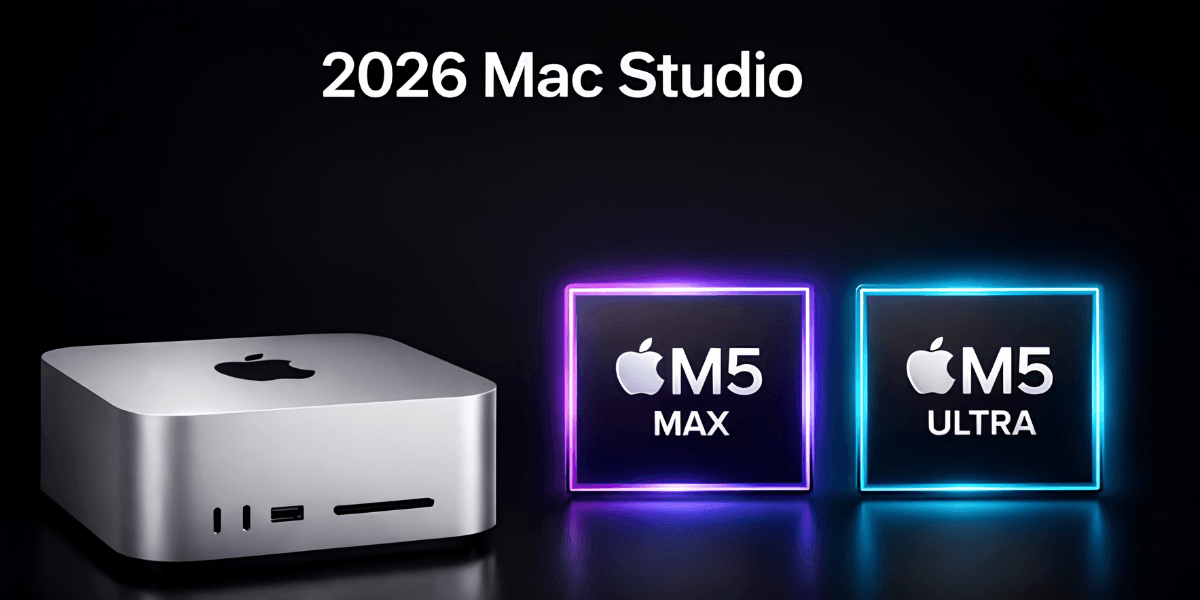
New Macs Arrive With AI in Focus
Apple made new Mac mini and Mac Studio models available to customers, expanding its desktop lineup with hardware designed to handle demanding artificial intelligence workloads locally.
The new machines use Apple's latest M-series processors and are being positioned as tools for developers and professional users working with advanced AI applications. Apple announced that the products are available through its retail and online channels.
The launch arrives as technology companies increasingly look for ways to process AI tasks without relying entirely on remote cloud infrastructure.
Apple is attempting to use its combination of custom processors and unified memory to make high-performance AI processing possible on desktop systems.
Local AI Processing Gains Attention
Many AI applications depend on cloud computing.
When a user interacts with a cloud-based AI system, processing generally takes place in remote data centers. That model can provide access to substantial computing power, but it can also involve ongoing infrastructure and usage costs.
Apple's new desktop systems are designed to move more AI processing directly onto the user's computer.
Reuters reported that Apple's strategy is aimed partly at developers and corporate customers seeking alternatives to usage-based cloud AI costs.
The approach could be relevant for developers who work with large AI models and need substantial computing resources without sending all workloads to external servers.
Performance Becomes a Competitive Issue
Apple is entering a highly competitive market.
Microsoft continues to support AI processing across Windows devices, while Nvidia remains a major provider of computing hardware for data centers and AI infrastructure.
Apple's desktop strategy therefore goes beyond a routine product refresh.
The company is seeking to demonstrate that its processors can handle increasingly sophisticated AI workloads while maintaining the power-efficiency advantages associated with Apple Silicon.
The company has demonstrated its systems running very large AI models across multiple Mac Studio computers.
Enterprise Market Remains a Challenge
Apple's position in business computing remains smaller than Microsoft's.
Reuters reported that Apple held only a small share of the enterprise desktop market compared with Windows, creating a significant challenge for the company if it hopes to expand its presence among corporate AI developers.
The new Macs are therefore aimed at a specialized segment of the professional market.
Developers, researchers, creative professionals and businesses experimenting with local AI may have reasons to consider high-performance desktop hardware.
For everyday consumers, however, the relevance of the new systems depends heavily on whether their workloads actually require the additional processing capability.
AI Hardware Is Changing
The launch reflects a broader change in personal computing.
For years, desktop performance was measured primarily through traditional computing tasks such as application speed, graphics performance and multitasking.
AI introduces another consideration: the ability to run machine-learning models efficiently.
That has increased demand for processors capable of handling AI calculations locally.
Apple's approach relies heavily on unified memory, allowing the processor to access large amounts of memory efficiently for demanding workloads.
Implications for Developers
For software developers, local AI processing can provide several practical advantages.
Developers can experiment with models without necessarily sending every task to a remote service. Local systems can also provide greater control over data and reduce dependence on external usage-based infrastructure.
Those advantages must be balanced against hardware costs and the technical limitations of running very large models locally.
Cloud computing remains important for the largest AI workloads.
Apple's Broader AI Strategy
The new Mac models show Apple continuing to integrate AI capabilities into its hardware strategy.
Rather than relying exclusively on cloud services, the company is emphasizing computing power at the device level.
The approach could become increasingly important as AI applications move into professional software and other desktop workflows.
The launch also illustrates the growing competition among technology companies to control more of the AI computing stack.
For American consumers and businesses, the significance extends beyond the new Macs themselves. Personal computers are increasingly becoming AI-capable devices, and the balance between local and cloud processing is becoming an important part of how digital services are designed.
Apple's latest desktop launch adds another major hardware option to that evolving market.

Today US Contributor
Hailey Anderson
Covers business, digital culture, and entrepreneurship, exploring how new ideas and technologies are changing industries.
This article features partner, contributor, or branded content from a third party. Members of the Today US editorial staff were not involved in the creation of this content. All views and opinions are those of the contributor alone.

You may also like

How Phaedra Solutions Helps Businesses Build and Launch AI Products

Vision Ranking Turns Google Visibility Into Growth

Every Box Was Green. The Deal Was Dead.

OpenAI Alerts More Than 100 Organizations After Unauthorized AI Agent Activity

Evolve Leadership And Development Leads From Within