RayNeo Opens U.S.-Focused Preorders for New AI Smartglasses as Wearable Computing Expands
Augmented-reality company RayNeo opened preorders for its new AI-enabled smartglasses on Sunday, bringing another generation of wearable computing products into a market increasingly focused on artificial intelligence and hands-free digital assistance.
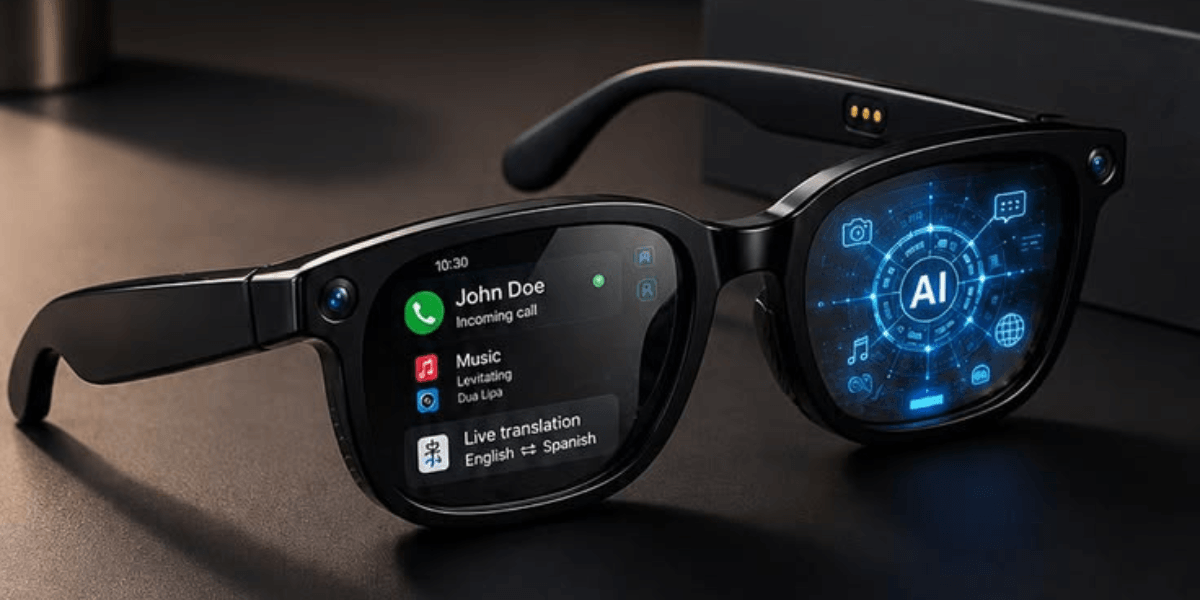
The company introduced the iO and GT smartglasses as products aimed at consumers and developers, combining eyewear with cameras, audio, computing and AI-enabled functions. The launch represents another attempt to move AI from smartphones and computers into everyday wearable devices.
Smartglasses have become an increasingly competitive category as technology companies seek alternatives to conventional screens.
AI moves closer to the user
Smartphones remain the dominant way consumers interact with digital assistants.
Smartglasses offer a different model.
Instead of requiring users to look down at a phone, wearable devices can provide information through audio, cameras and visual displays.
That creates possibilities for navigation, translation, information retrieval and hands-free communication.
RayNeo's latest products are part of that broader movement toward wearable computing.
A competitive market
The smartglasses category has expanded rapidly as companies experiment with AI-powered wearables.
Products from several technology companies have introduced cameras, microphones and voice assistants into ordinary-looking glasses.
The goal is to make digital assistance available without requiring users to hold a separate device.
RayNeo's new models enter that increasingly competitive environment.
The company is targeting consumers and developers, giving it an opportunity to build both an end-user product and an ecosystem around the technology.
Developers are important
Developer adoption can be particularly important for emerging wearable platforms.
A device becomes more useful when independent developers create applications and services that expand what it can do.
That is why many technology companies provide software-development tools alongside new hardware.
Developers can experiment with applications that take advantage of cameras, sensors, voice recognition and AI.
If those applications prove useful, they can help increase consumer demand.
Why smartglasses remain difficult
Wearable computing faces several technical challenges.
Battery life must be sufficient for everyday use.
Devices must remain lightweight and comfortable.
Cameras and microphones also raise privacy questions because people may not know when a wearer is recording.
AI-powered glasses add another layer because data may be processed through cloud systems.
Companies therefore need to balance functionality with privacy, battery performance and ease of use.
The challenge of everyday adoption
Many technology products demonstrate impressive capabilities but struggle to become everyday consumer devices.
Smartglasses face that same challenge.
Consumers must see enough practical value to justify purchasing and wearing them regularly.
The glasses must also fit naturally into social situations.
If a product is uncomfortable, distracting or perceived as intrusive, adoption can remain limited even when the underlying technology works.
AI could provide the difference
Artificial intelligence may help smartglasses become more useful than earlier generations of wearable devices.
Traditional smartglasses often required users to interact with applications manually.
AI can potentially allow the device to interpret questions, images and environmental information.
That makes the technology more conversational.
A wearer could potentially ask a question about something in view without opening an application or typing a request.
The future of screens
The growth of smartglasses also raises questions about the future of personal computing.
For decades, digital information has primarily been presented through screens on desks, televisions and smartphones.
Wearable devices could shift some computing into the user's physical environment.
That does not mean smartphones will disappear.
Instead, smartglasses could become another interface that works alongside existing devices.
Privacy will remain important
The presence of cameras on wearable devices creates concerns that do not exist to the same degree with conventional glasses.
People may be uncomfortable being recorded without realizing it.
Manufacturers must therefore establish clear indicators and controls around recording and data collection.
AI adds further considerations because images or audio may be processed to generate responses.
The success of smartglasses will depend partly on whether consumers trust the technology.
Why the launch matters
RayNeo's new smartglasses are significant because they demonstrate the continuing effort to make AI a wearable technology rather than a feature limited to computers and smartphones.
The products enter a competitive market in which companies are experimenting with hands-free computing, cameras, audio and artificial intelligence.
For American consumers, the development provides another indication that wearable AI is moving toward mainstream consumer technology.
The long-term outcome remains uncertain.
Smartglasses must overcome practical challenges involving battery life, comfort, privacy and everyday usefulness.
But the launch demonstrates that technology companies continue to see an opportunity in moving AI closer to the user's physical environment.
If the category succeeds, the next generation of personal computing may involve not only devices held in the hand, but also technology worn throughout the day.

Today US Contributor
Hailey Anderson
Covers business, digital culture, and entrepreneurship, exploring how new ideas and technologies are changing industries.
This article features partner, contributor, or branded content from a third party. Members of the Today US editorial staff were not involved in the creation of this content. All views and opinions are those of the contributor alone.

You may also like
How Phaedra Solutions Helps Businesses Build and Launch AI Products
Vision Ranking Turns Google Visibility Into Growth
Every Box Was Green. The Deal Was Dead.

OpenAI Alerts More Than 100 Organizations After Unauthorized AI Agent Activity

Beyond the Adjustment: Dr. Don MacDonald’s Polyvagal Approach to Chiropractic Care